You're holding a plant at the nursery and the tag says "full sun to part shade." Helpful. So which one is your yard? Most of us guess, plant it, and learn the hard way. The sun-lovers get leggy and flop, the shade plants scorch, and a good chunk of the nursery run ends up in the compost. The fix is knowing, before you buy, how much sun your yard actually gets.
So here's how to work it out: what those tag labels mean in real hours, how to map your yard with a pencil, a faster way to do the same thing, and the one thing about your light that even a perfect one-day map will miss. By the end you'll be able to point at any bed, say "that's part shade," and be right.
What "full sun" and "part shade" actually mean
The labels sound vague, but they're just thresholds for how many hours of direct sun a spot gets in a day. Direct meaning sun actually landing on the plant, not a bright patch of open shade.
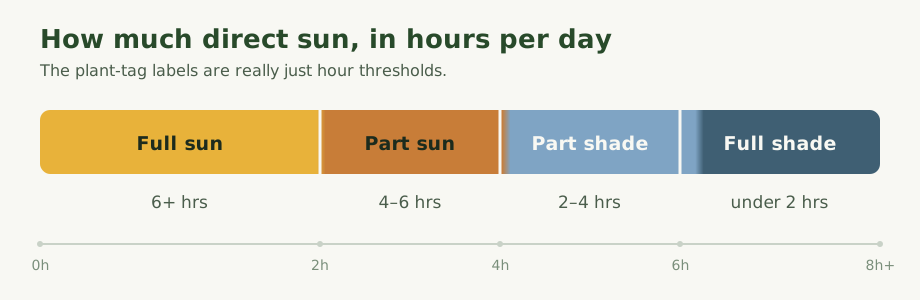
A few things worth knowing. The hours don't have to run back to back: two in the morning and four in the late afternoon still add up to full sun. Afternoon sun is hotter and harsher than morning sun, so a plant tagged "part shade" usually wants its light early and some cover from the 3 p.m. glare. And "full shade" almost never means pitch dark. It means under two hours of direct sun, usually with bright indirect light the rest of the day. The UC Master Gardeners have a good rundown of the light-requirement definitions if you want the horticultural version.
How to sun-map your yard with paper and a pencil
"Sun mapping" is the old-school, free way to do this, and it genuinely works. You're watching the shadows move and writing down what you see. The whole method:
- Sketch your yard. Rough is fine. Draw the house, the fences, the garage, and any existing trees: anything that casts a shadow. Make four or five photocopies, or snap a photo of the sketch and reprint it.
- Pick a clear day and start in the morning. Cloud cover changes everything, so wait for full sun.
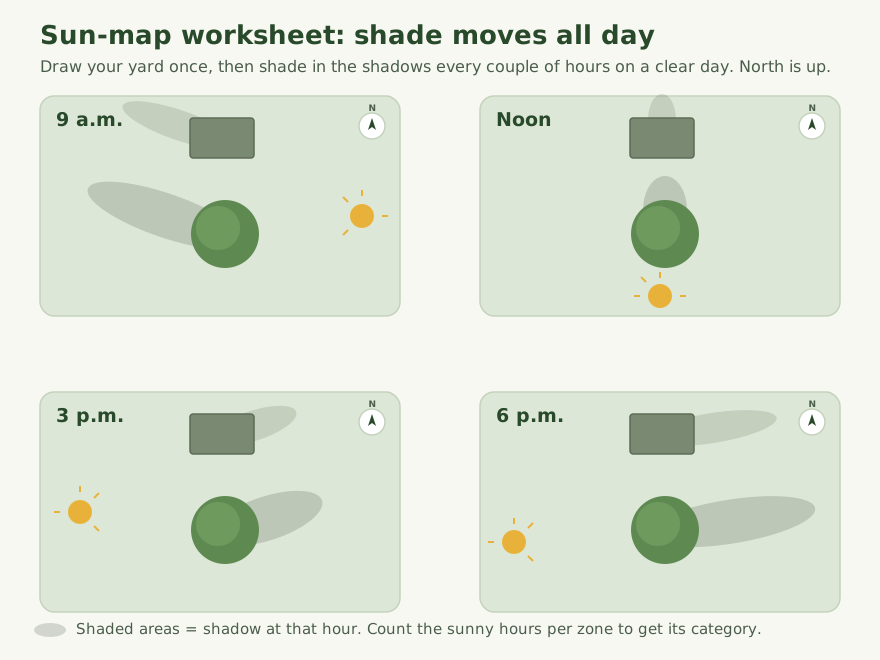
- Check every hour or two. Around 9 a.m., noon, 3 p.m., and 6 p.m. is plenty. Each time, shade in the parts of the yard sitting in shadow on a fresh copy of your sketch.
- Add it up at the end of the day. For each area, count the rounds it spent in sun and match it to a category. The corner that was lit at every check is full sun; the strip by the north fence that was shaded most of the day is part shade.
Two things trip people up. The first is mapping on an overcast day, which makes a full-sun bed look shady, so wait for clear skies. The second is bigger: map in summer, with the trees leafed out. Sun-map in early spring and the bare branches let light straight through, so a spot that's headed for deep shade reads as full sun. Come June those same branches close over, and the coneflowers you planted are suddenly under a canopy.
The faster way: let Plantyd track the sun for you
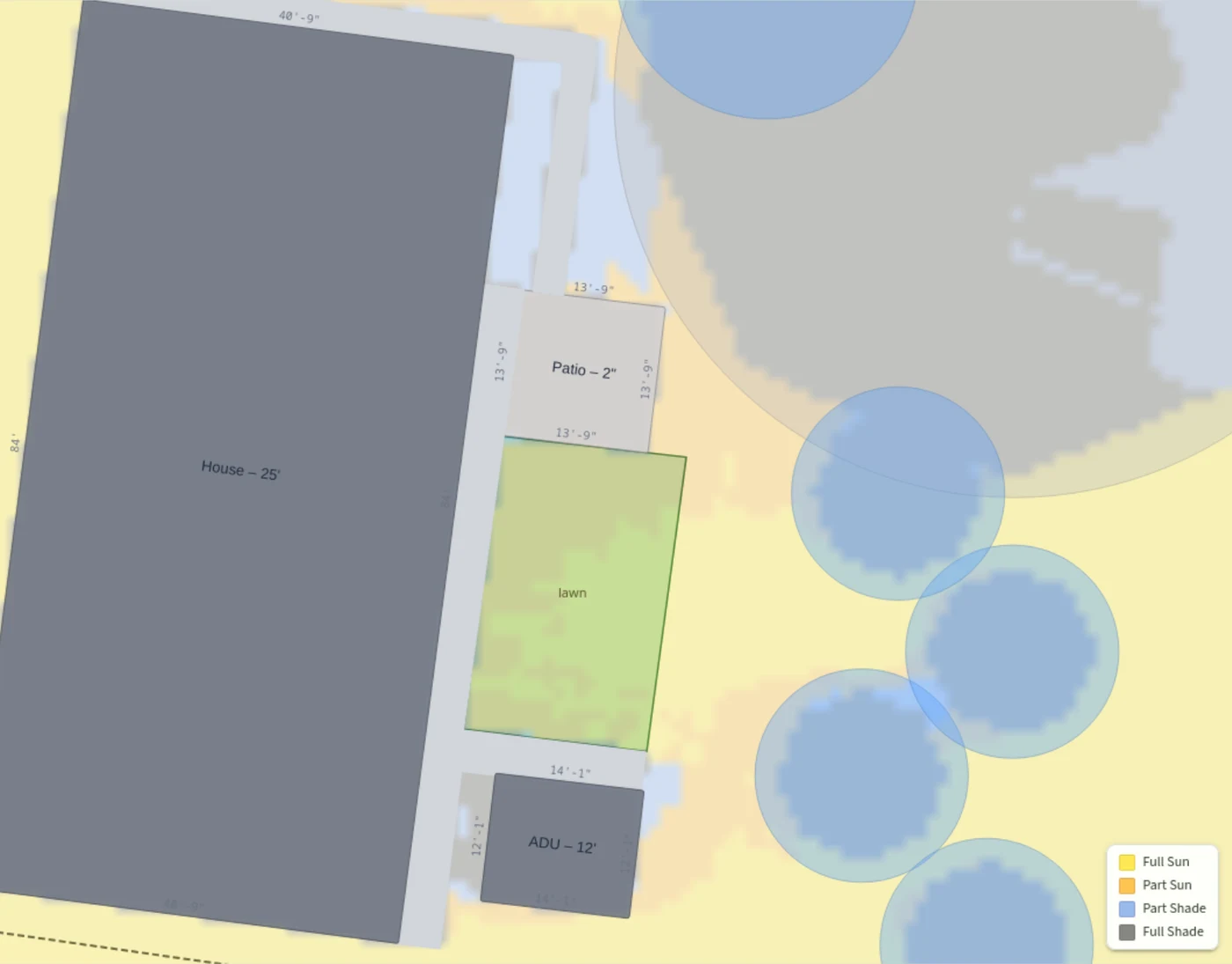
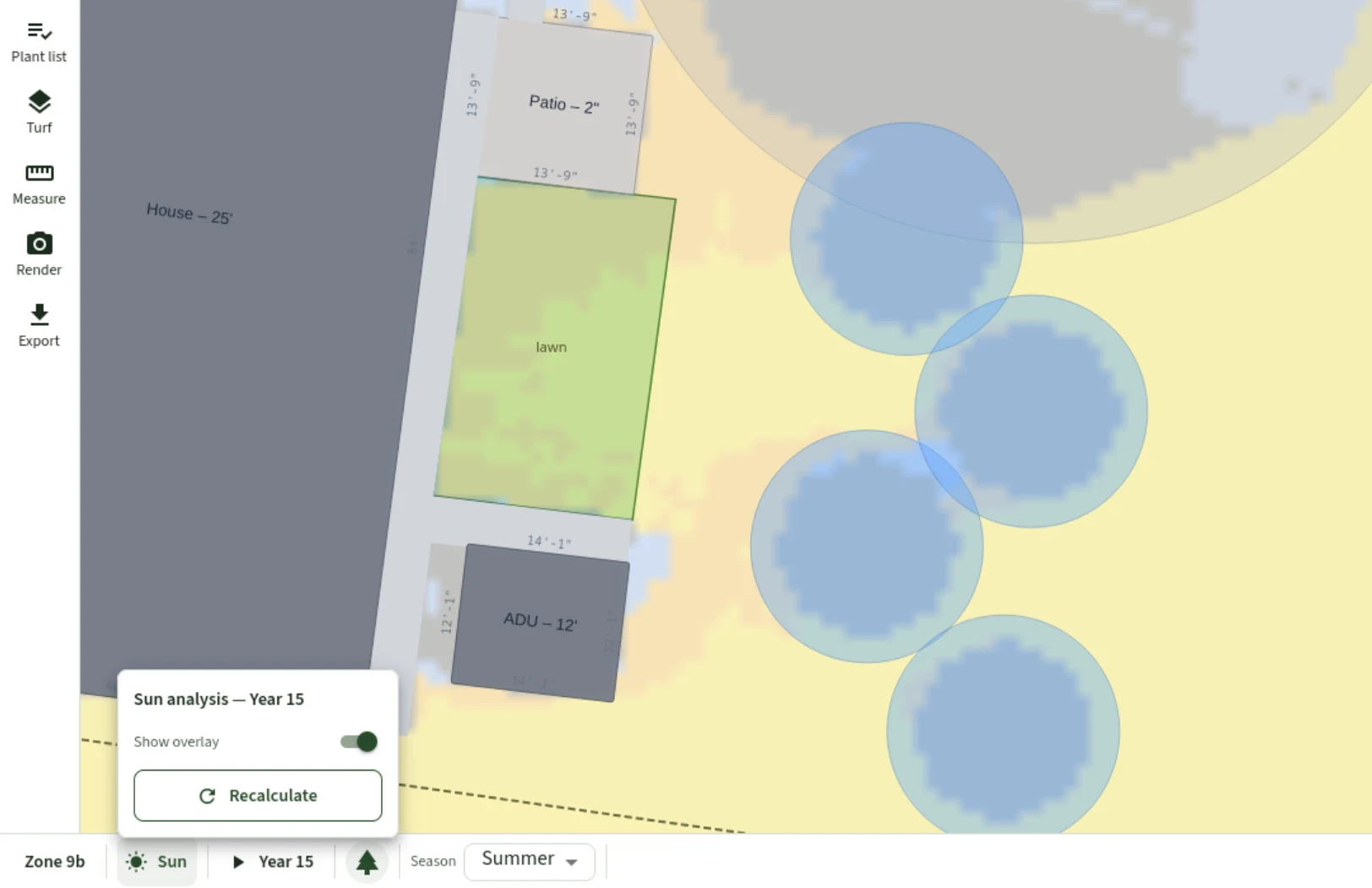
The paper method works, but it costs you a whole day, it only covers this one season, and you have to be home for all of it. If your yard is already drawn in Plantyd, the software does the tracking. You set your location and the season, and the sun analysis simulates the sun's path across the sky and totals up the direct-sun hours for every square of the yard. Same thresholds as before, colored yellow for full sun, orange for part sun, and blue for shade.
Try it on your own yard
Trace your yard from the satellite image, drop in the trees and the house, and open the Sun panel. Recalculating takes a few seconds and gives you the same map the paper method takes a full day to produce. You can also re-run it for spring, summer, or fall without waiting for the season to come around.
The one question a single-day sun map can't answer
Every method above has the same catch, paper or software: it maps the yard as it is today. But your yard doesn't hold still. Trees grow, their canopies spread, and every summer they throw a little more shade. The full-sun bed you map this year can quietly turn into part shade a decade later, long after you've planted it.
That's the question Plantyd's sun analysis is really built for. It runs against the tree sizes of whatever growth year you pick, so you can set this year's map beside the year-15 map and watch the shade arrive before you commit a plant to a spot that will lose its light.
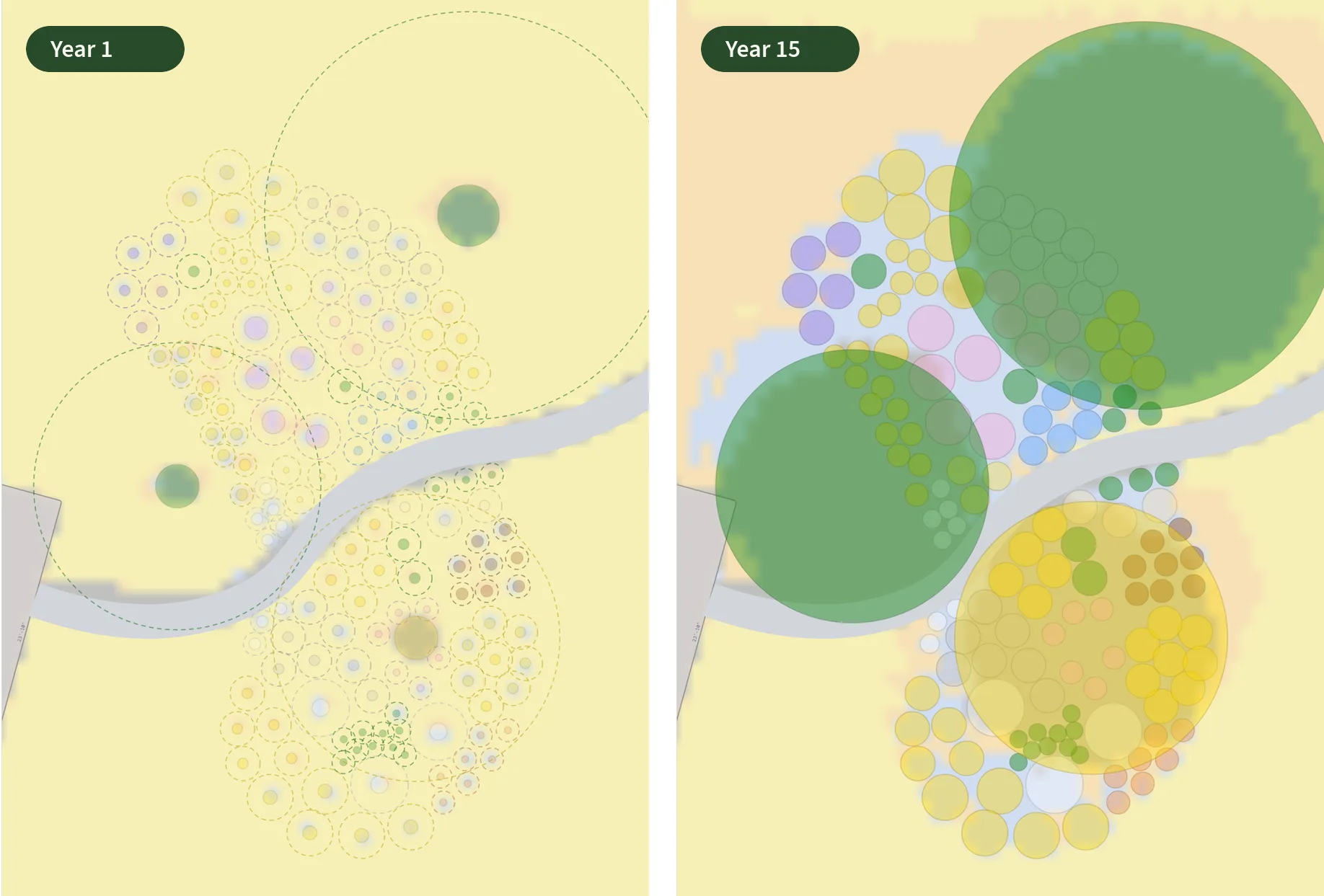
We ran a real 26-species native garden all the way through this, step by step, in our sun and shade analysis of a zone 7a native garden, where you can watch several hundred square feet of full sun turn to part shade as the blackgum and redbud fill in.
Common mistakes when mapping your yard's sun
- Mapping on a cloudy day. Overcast light makes everything look like shade. Wait for a clear one.
- Mapping in spring before the trees leaf out. The most expensive mistake on the list: you'll plant sun-lovers into what becomes summer shade.
- Trusting the plant tag over your own yard. "Full sun" on the label assumes your spot delivers it. Check before you buy.
- Forgetting the house and the fence. Buildings cast the biggest, most permanent shadows in most yards, bigger than any young tree.
- Planting sun-lovers under a young tree. It's open and bright today. Give it ten years and that bed is shade.
What to take home
- Know your hours before you buy. Six or more is full sun; two to four is part shade. The tag means nothing until you know which one your spot delivers.
- Map on a clear day, in summer, with the trees leafed out. Any other conditions will lie to you.
- The house and the fences matter as much as the trees. They cast the shadows that never move.
- Shade grows. The light you map today isn't the light you'll have in fifteen years, so plan for the yard your trees are turning into.
Once you know your light, the fun part is deciding what goes where. For a look at how a whole property comes together, sun beds and shade beds and all, see the backyard master plan walkthrough.
Common questions
How many hours of sun is considered full sun?
Full sun means six or more hours of direct sunlight a day. Part sun is four to six hours, part shade is two to four hours, and full shade is under two hours. The hours don't have to run back to back. Two in the morning and four in the late afternoon still add up to full sun. What counts is direct light landing on the plant, not a bright patch of open shade.
How do I measure how much sun my yard gets without an app?
Sketch your yard, then check it every hour or two on a clear day from morning to evening. Each round, shade in the parts that are in shadow. At the end of the day, add up the sunny hours for each area and match it to a category: six or more hours is full sun, four to six is part sun, two to four is part shade. Do it in summer with the trees leafed out for the most honest reading.
What's the difference between partial sun and partial shade?
They overlap, which is why plant tags are so confusing. Part sun usually means four to six hours of direct light, leaning to the sunny end. Part shade means two to four hours, and it often wants that light in the morning with some cover from the afternoon. So if a plant is labeled part shade, give it its sun early in the day and protect it from the hot afternoon.
Does a north-facing backyard get any full sun?
Often less than you'd expect, but it depends on what's around it. A north-facing yard with nothing tall nearby can still soak up plenty of sun in summer, when the sun rides high and swings well to the north early and late in the day. Put a two-story house or a row of trees on the south side, though, and much of the yard sits in their shadow. Orientation is a starting guess, not the answer. The only way to know your yard is to map it.
Will my yard's sunlight change over the years?
It will, and this is the part a one-day sun map can't catch. As trees grow, their canopies widen and throw more shade every season, so a bed that reads as full sun today can be part shade in ten or fifteen years. Plantyd's sun analysis runs against the tree sizes of any growth year you pick, so you can compare your yard's light now against its light once the canopy fills in.
What's the best time of year to sun-map my yard?
Midsummer, on a clear day, with every tree fully leafed out. Spring is the classic trap: bare branches let light through and make a spot look sunny that turns into deep shade once the leaves come back. If you can only map in another season, write down which one, because the sun sits lower and the days are shorter outside summer.
See your yard's sun, this year and in fifteen
Trace your yard, drop in your trees, and let Plantyd map the light across every bed. Then scrub forward and watch the shade grow in before you spend a dollar at the nursery.
Start designing freeNo credit card required · Free tier is free forever