Know exactly where every shadow falls
Plants fail in the wrong light more often than for any other reason. Plantyd counts the hours of direct sun that reach every square foot of your yard, then shows you the species that will work best.
Plantyd is in closed beta. Ask for an invite — we send them as places open up.
Most planting mistakes are light mistakes
A hydrangea scorched brown by two in the afternoon, a coneflower that flops and never sets a decent bud, a lawn that never fills in along the north fence — these usually come down to one thing. The plant is in the wrong light.
Light is also the hardest thing to judge by eye. You see your yard at the times you happen to be home, in the season you happen to be looking. And you remember the sunny afternoon, not the ten months of shade.
Plantyd counts the hours of direct sun on every square foot
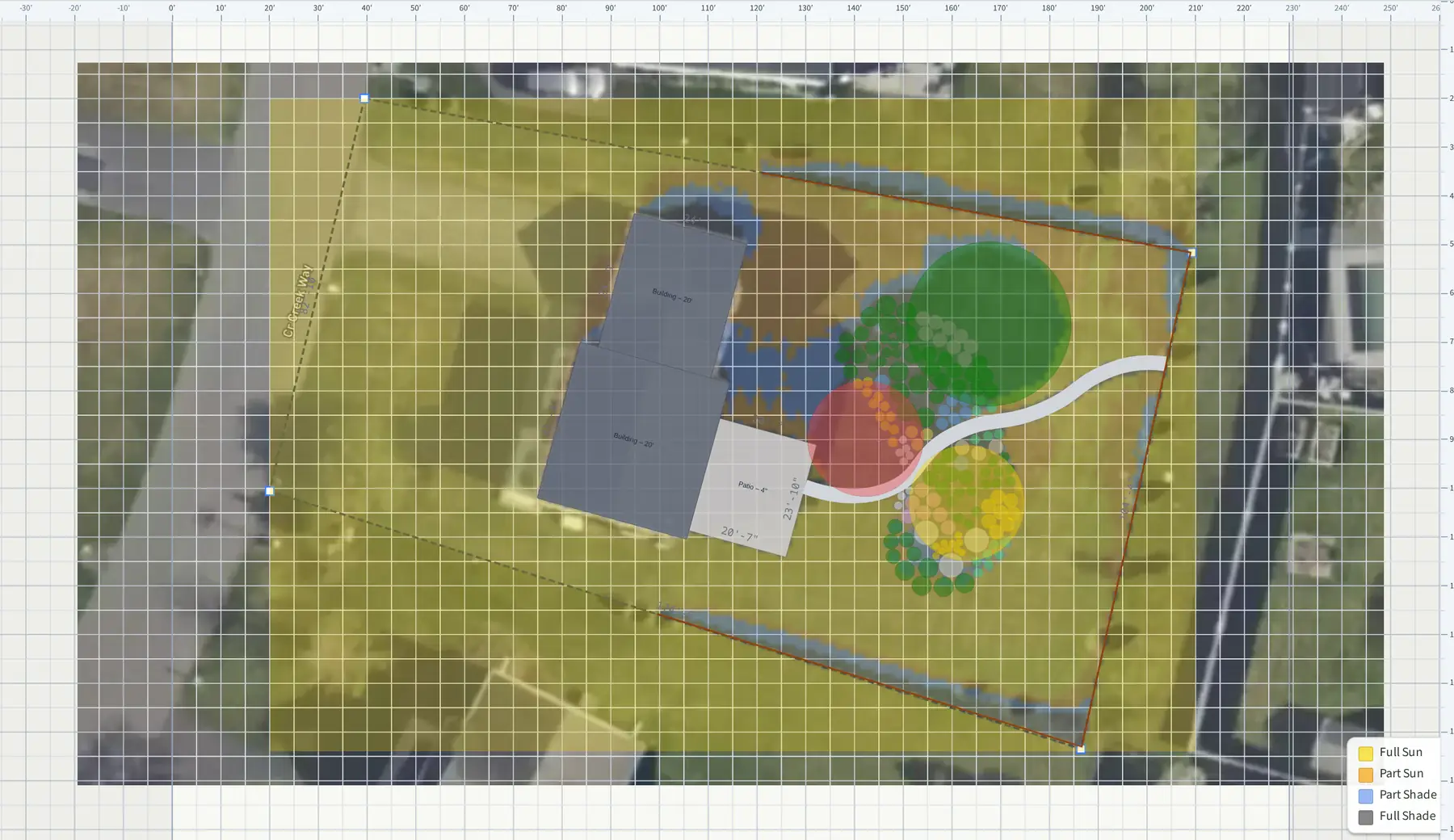
Plantyd divides your yard into one-foot squares and puts the sun through the sky above them every half hour, using the same NREL solar-position model professional site analysis uses. It does this on the four dates that bracket the year: both solstices and both equinoxes.
For each square foot it counts the hours the sun reaches the ground. It allows for whatever stands in the way: your house, your fence, your neighbor's garage, and the canopy of every tree in your design. Canopies are not solid — a tree lets some light through, and a shrub lets more.
It then sorts every square foot into one of four sun classifications and colors the map.
| Class | Direct sun per day |
|---|---|
| Full sun | Six hours or more |
| Part sun | Four to six hours |
| Part shade | Two to four hours |
| Full shade | Under two hours |
The map changes with the season and with the year
A yard is not one light map. The same bed that bakes in July can sit in shadow all winter, because the sun is lower and the house casts a longer shadow.
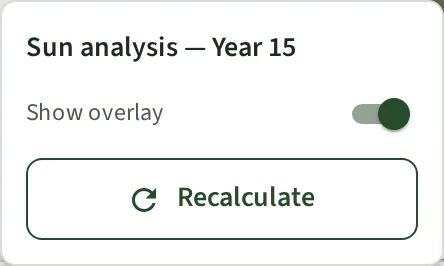
Plantyd recalculates as you change the season, so you can check a spot in both. It also recalculates as you move the growth timeline. Plantyd draws shade from the canopies at whatever year you are looking at, so a bed in full sun at Year 1 can be in part shade by Year 15 — under a tree you planted yourself.
The default overlay averages all four dates, winter included, so it runs a little shadier than the growing season alone. Check the summer map when you are choosing for June. Free accounts get the summer map, which is the one most people want first; Pro runs all four.
Filter the plant library to the light you have
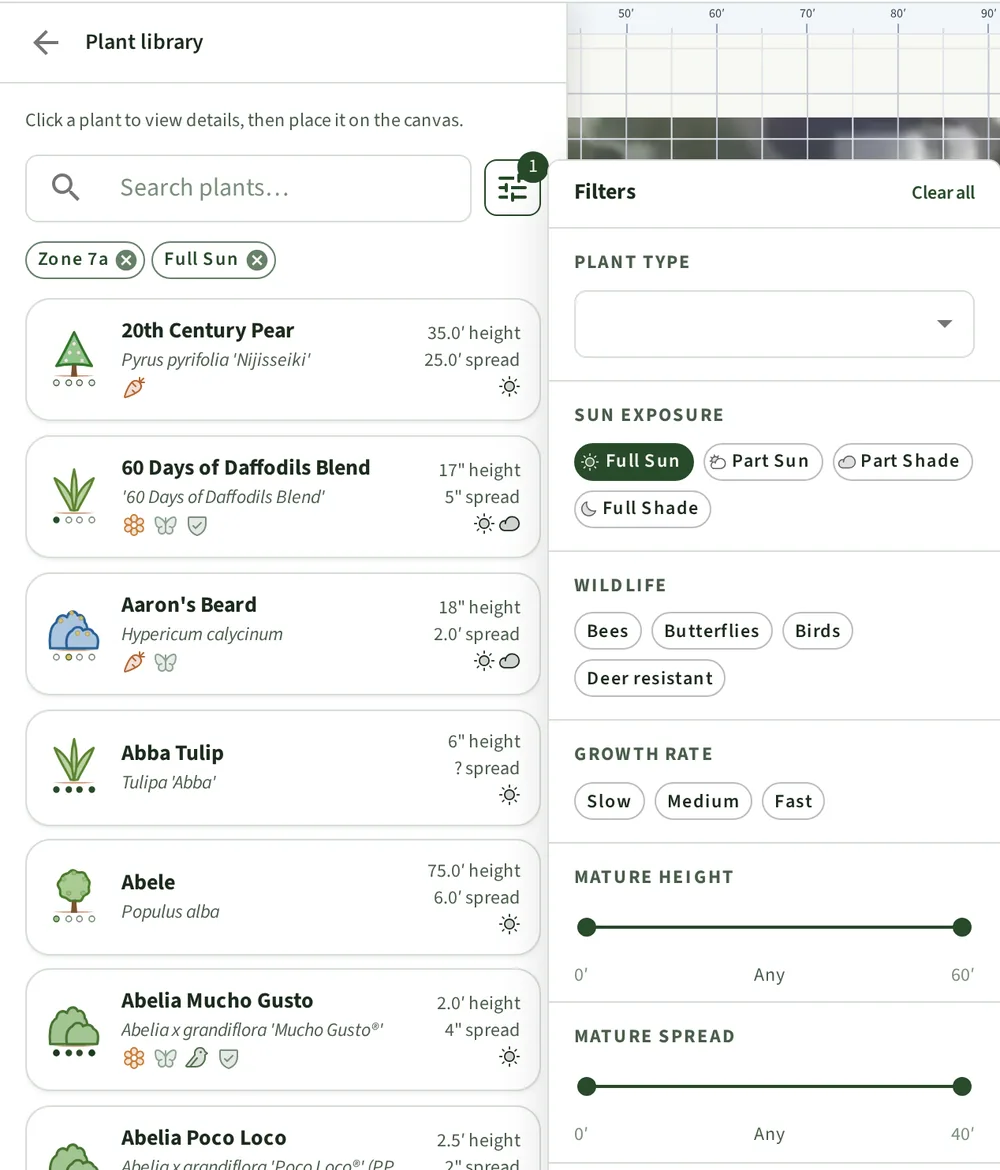
The sun overlay is not just a picture. Read the class of the spot you are planting. Set the plant library's Sun Exposure filter to match. The library drops to species that will work there.
Plantyd applies your hardiness zone for you, so the obvious mismatches are gone before you start. Treat that as a floor rather than a guarantee: a USDA zone only describes average winter lows, so an exposed site or a pot will still kill a zone-hardy plant. Plants whose hardiness we have not recorded are shown rather than hidden.
See this on your own yard
Request an inviteLeave your email and we’ll send your invite as places open up. We only email about your invite and the occasional update.
The rest of the picture
Start from a satellite view of your actual yard
Type your address and trace your property line. Two minutes later you have a to-scale design of your yard with the house, the driveway, and the existing trees already on it — and you never touched a tape measure.
See how satellite canvas works →Bed plannerPlan your vegetable beds week by week
Lay crops out on a square-foot grid, and Plantyd builds a calendar from your own frost dates: when to sow, when the bed frees up, and what can still finish before the cold.
See how bed planner works →Growth over timeWatch your garden mature before you plant a thing
Move one slider and your whole design grows. See it at Year 1, Year 5 and Year 15, so you can fix the spacing now — while fixing it is free.
See how growth over time works →