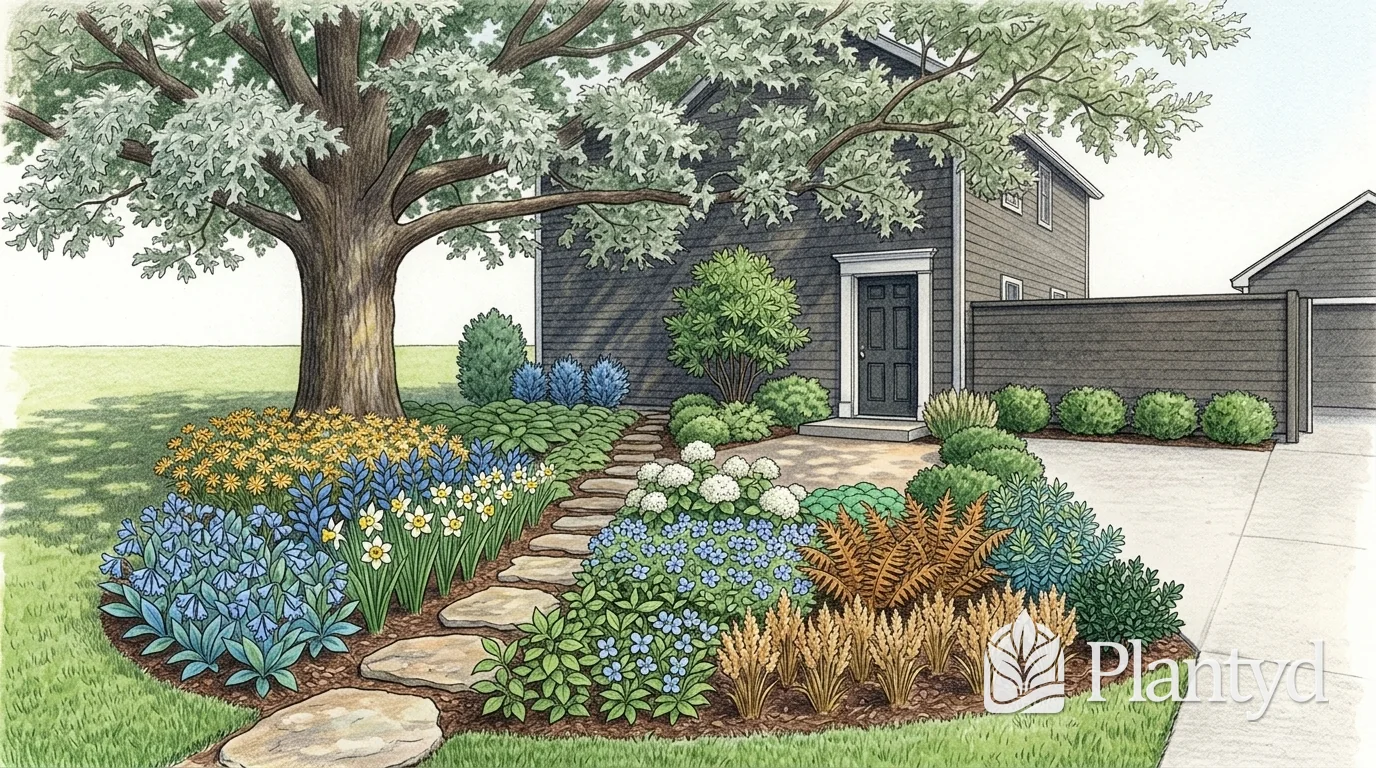
The lawn under a big oak usually goes the same way. Every spring you rake out the bare patches, put down seed and water it, and a thin green haze comes up. By August the ground is dirt and moss again. Seeding in fall instead of spring buys the grass a season, but it doesn't fix the light, and the oak's roots still take the water.
This shade front yard landscaping plan is for a two-story center-hall house in Owings Mills, Maryland, in Baltimore County, zone 7a. The house faces south onto a front yard 70 feet wide and about 42 feet deep, and an existing red oak, sixty-five feet tall and sixty feet across, stands twenty feet from it. The plan keeps the oak and gives up the lawn under it. The ground beneath the canopy is planted like a woodland floor, with ferns, foamflower, phlox and asters in pockets between the roots, and Virginia bluebells that flower blue in April. A small panel of lawn stays in the sun by the drive. All thirteen new kinds of plants are native to the eastern US except the daffodils.
We drew this yard in Plantyd and ran the sun analysis before planting anything. Under the canopy, a summer day brings about two hours of direct sun. Tall fescue needs twice that, and even the fine fescues need two hours just to hang on. So the lawn line follows the edge of the canopy, and everything under the oak is planted for full shade. You can download the plan sheet near the bottom of the page.
| Yard | 70 feet wide, about 42 feet from the house to the sidewalk |
|---|---|
| House | Two-story center-hall house with an attached garage, facing south |
| The tree | An existing red oak, 65 feet tall and 60 feet across, 20 feet from the house |
| Where | Owings Mills, Baltimore County, Maryland, USDA zone 7a |
| Built for | A front yard that looks cared for, with no grass fighting the tree |
| Plants | 13 new kinds, 223 new plants, all native to the eastern US except the daffodils |
| Paving | The existing walk and stoop, plus flagstone stepping stones set on the ground |
| Upkeep | Shred the oak's leaves with the mower and spread them on the beds, cut back the asters in spring, and water the new plants through their first two summers |
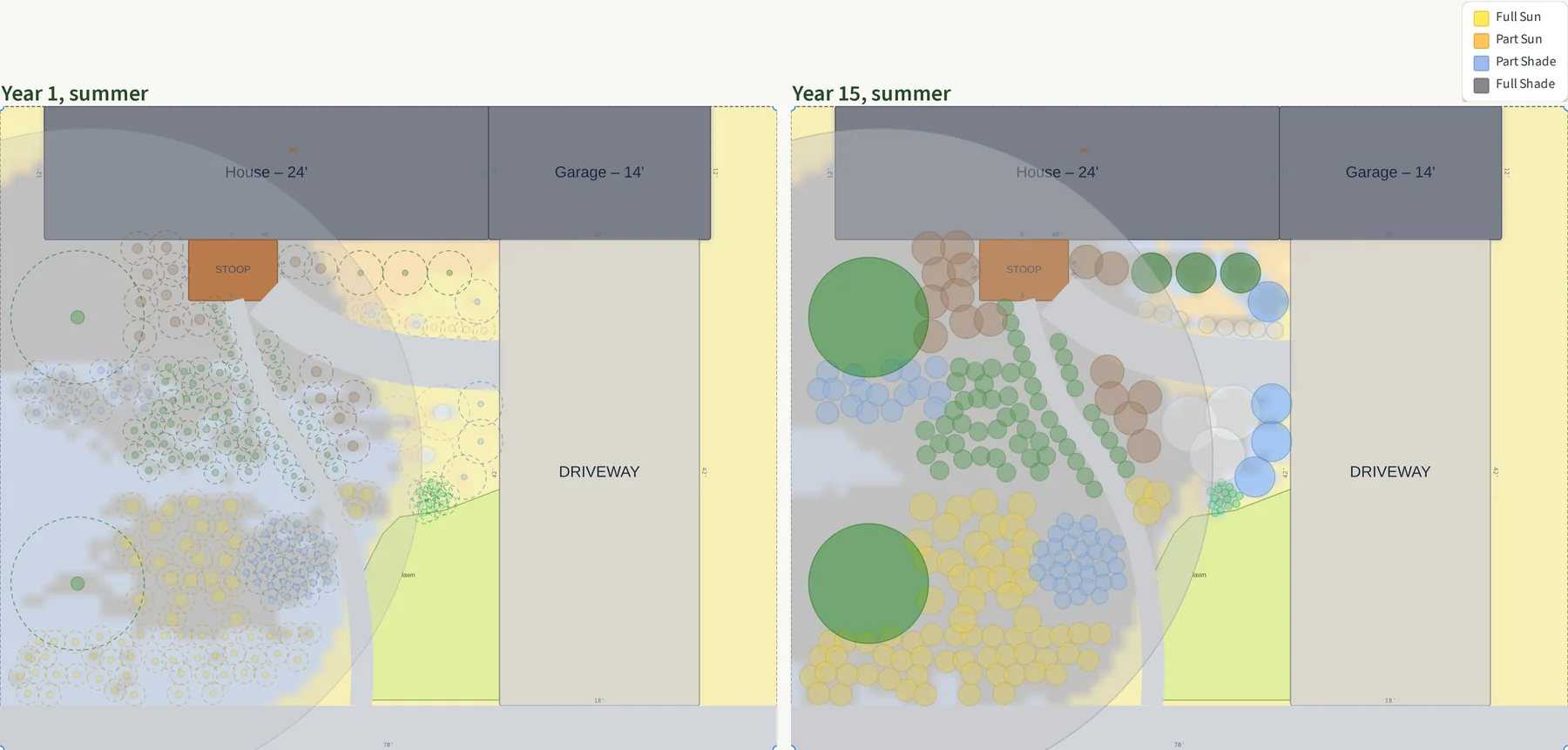
The lawn ends at the edge of the oak's canopy
We ran that first reading on the bare yard, with only the house and the oak drawn. The shade came out the same from one side of the canopy to the other. Past the drip line, the outer edge of the canopy, the reading toward the drive jumped to seven to ten hours of sun. The only ground in between is a strip at the east end of the house, and that is where the inkberry goes.
So the lawn line follows the drip line. Turf stays in the sunny panel by the drive, about twelve feet by eighteen, and all the ground under the oak becomes planting beds.
In Plantyd you draw your house and your trees and see where the sun lands. Your oak won't match this one hour for hour, so find your own numbers with how much sun your yard gets.
The oak is the only tree this yard can hold
A dogwood where the walk meets the drive looks right on paper, and our first draft had one, for white flowers in spring. When we ran the plan fifteen years forward, Plantyd's sun analysis showed it shading the sunny bed by the drive down to just over an hour of sun. That is too little for the daffodils, the hydrangeas or anything else in that bed.
So the dogwood came out, and dwarf fothergilla took over its jobs at shrub height, with white bottlebrush flowers in April and red-orange leaves in fall.
Everything under the oak grows in full shade
Two hours of sun is right on the line between part shade and full shade, so a part-shade plant under this oak would be living on the edge. Every plant under the canopy grows in full shade. Christmas fern goes under the windows, Allegheny spurge on the north side of the trunk and white wood aster to the south. Green-and-gold runs along the sidewalk, and foamflower and woodland phlox grow beside the stepping stones.
Virginia bluebells go in a drift by the stones. They flower blue in April, while the oak is still leafing out, and they die back out of sight by midsummer. Like the phlox and the foamflower, they do most of their growing in spring, before the canopy closes.
The oak's roots stay undisturbed
A red oak with a trunk thirty inches across has roots under most of this yard. Arborists protect a circle around the trunk with a radius of at least one foot for every inch of trunk diameter, measured at chest height, and many prefer a foot and a half. Here that comes to thirty to forty-five feet, and the larger circle takes in the whole yard west of the drive.
Nothing under the oak is dug up, built up or paved over. The thin turf that is left goes under two or three inches of shredded leaves, kept off the trunk, and you pull any grass that pokes through. The perennials go in as plugs and quarts, in small holes between the roots.
The only shrubs under the canopy are two great rhododendrons, eleven feet from the trunk. Their roots stay near the surface, so planting them cuts few of the oak's roots. They do need steady moisture, so soak them through dry spells for their first few summers.
Nothing is planted within four feet of the trunk, and the mulch stops short of the flare, where the trunk widens at the ground. The new path to the sidewalk is flagstone stepping stones set right on the ground, with no base dug out.
The plants grow in five large drifts
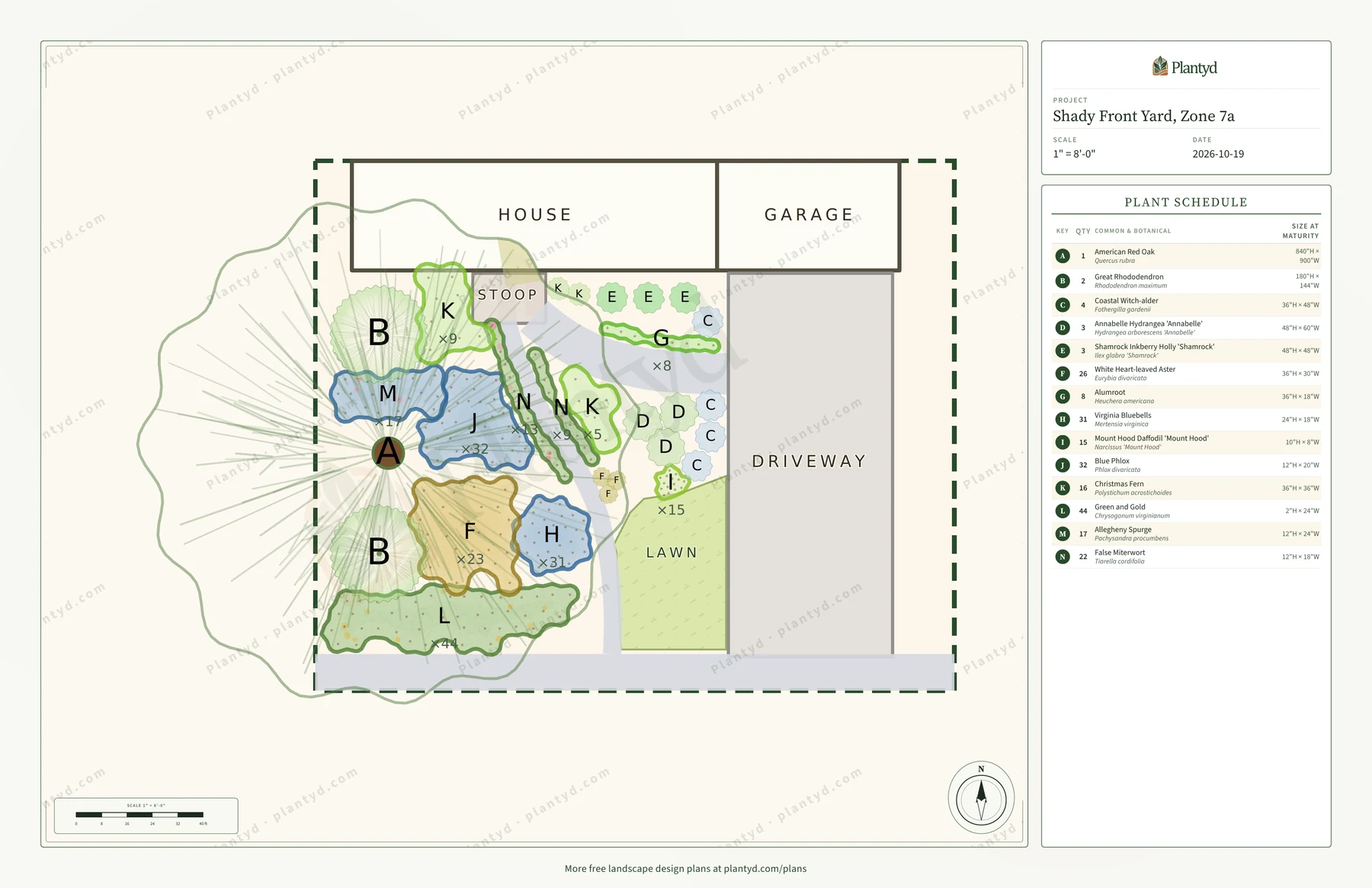
A shade garden can look like a weedy patch when its plants are dotted around one by one. Here the bed under the oak reads as five drifts from the house to the street: ferns, spurge, phlox, asters and green-and-gold. On their lower half, the stepping stones follow the drip line, so they also make the edge between the woodland and the lawn.
The rhododendrons sit at the two ends of the bed because each one grows twelve feet wide. For the spacing arithmetic, see how far apart to plant trees and shrubs.
Water for two summers, then keep an eye on the oak
The oak is full size on day one, so the shade hardly changes over the years, but the planting does. In the first summer the bed is leaf mulch with small plants scattered through it, and even when everything is grown, about half of it stays mulch. The oak drinks first, so soak the new plants through every dry spell for two summers.
By year three to five, the ferns, phlox and asters have filled in their drifts. Pull the aster seedlings that wander into the gaps. If deer are common where you live, expect them to browse the phlox and the hydrangeas.
After that, watch the oak more than the plants. If a tree thins out a few years after someone dug near it, take that as a sign the digging hurt its roots.
The plant list: shop from this list, not the sheet
Every new plant is native to the eastern US except the daffodils, though the spurge and the fothergilla come from farther south than Maryland. Every one is rated for zone 7a in Plantyd's plant library.
| Key | Qty | Plant | Size at maturity | Its job in the plan |
|---|---|---|---|---|
| A | 1 | Red oak (existing) Quercus rubra | 65 ft tall, 60 ft wide | Already there. The reason for the design |
| B | 2 | Great rhododendron Rhododendron maximum | 15 ft tall, 12 ft wide | The only shrubs under the oak, at the ends of the bed. Evergreen, shallow-rooted, pink-white July flowers |
| C | 4 | Dwarf fothergilla Fothergilla gardenii | 3 ft tall, 4 ft wide | White April bottlebrushes and orange-red fall color in the sunny corner |
| D | 3 | Smooth hydrangea 'Annabelle' Hydrangea arborescens 'Annabelle' | 4 ft tall, 5 ft wide | Big white summer flower heads by the drive |
| E | 3 | Inkberry 'Shamrock' Ilex glabra 'Shamrock' | 4 ft tall, 4 ft wide | Evergreen at the east end of the house, past the oak's shadow |
| F | 26 | White wood aster Eurybia divaricata | 3 ft tall, 2.5 ft wide | White stars on dark stems in September, south of the trunk |
| G | 8 | Alumroot Heuchera americana | 3 ft tall, 18 in wide | Edges the walk on the house side. Semi-evergreen leaves |
| H | 31 | Virginia bluebells Mertensia virginica | 2 ft tall, 18 in wide | Blue in April, while the oak leafs out. Dormant by midsummer |
| I | 15 | Daffodil 'Mount Hood' Narcissus 'Mount Hood' | 16 in tall, 8 in wide | White in spring, in the sunny corner by the drive |
| J | 32 | Woodland phlox Phlox divaricata | 12 in tall, 20 in wide | Pale blue, fragrant in spring, along the stepping stones |
| K | 16 | Christmas fern Polystichum acrostichoides | 2 ft tall, 2.5 ft wide | Evergreen fern under the front windows |
| L | 44 | Green-and-gold Chrysogonum virginianum | 8 in tall, 2 ft wide | Low yellow-flowered groundcover along the sidewalk |
| M | 17 | Allegheny spurge Pachysandra procumbens | 12 in tall, 2 ft wide | Mottled groundcover from the southern Appalachians, north of the trunk |
| N | 22 | Foamflower Tiarella cordifolia | 12 in tall, 18 in wide | White spring spikes, edging both sides of the stones |
Keep the oak and plant for the shade it makes, and the ground under it becomes a woodland garden that the tree mulches for you every fall.
Common questions
What can I plant under a big oak tree?
Choose native woodland plants that grow in full shade and go in small. Christmas fern and white wood aster handle the driest ground. Foamflower, woodland phlox, Allegheny spurge and green-and-gold want more moisture, so water them through their first two summers. Spring ephemerals such as Virginia bluebells, which flower and then die back by summer, bloom while the oak is still leafing out.
Why won't grass grow under my tree?
Lawn grasses need far more sun than a big canopy lets through in summer, and they compete with the tree's surface roots for water. Under a mature oak you'll be reseeding every year. Replace the lawn under the canopy with shade plants and leaf mulch.
Can I add soil over tree roots to make a new bed?
No. A layer of mulch is all the roots will take. Most of an oak's feeding roots are in the top foot of soil, and piling soil or regrading over them can starve them of air. Plant into the soil that is already there.
More plans like this
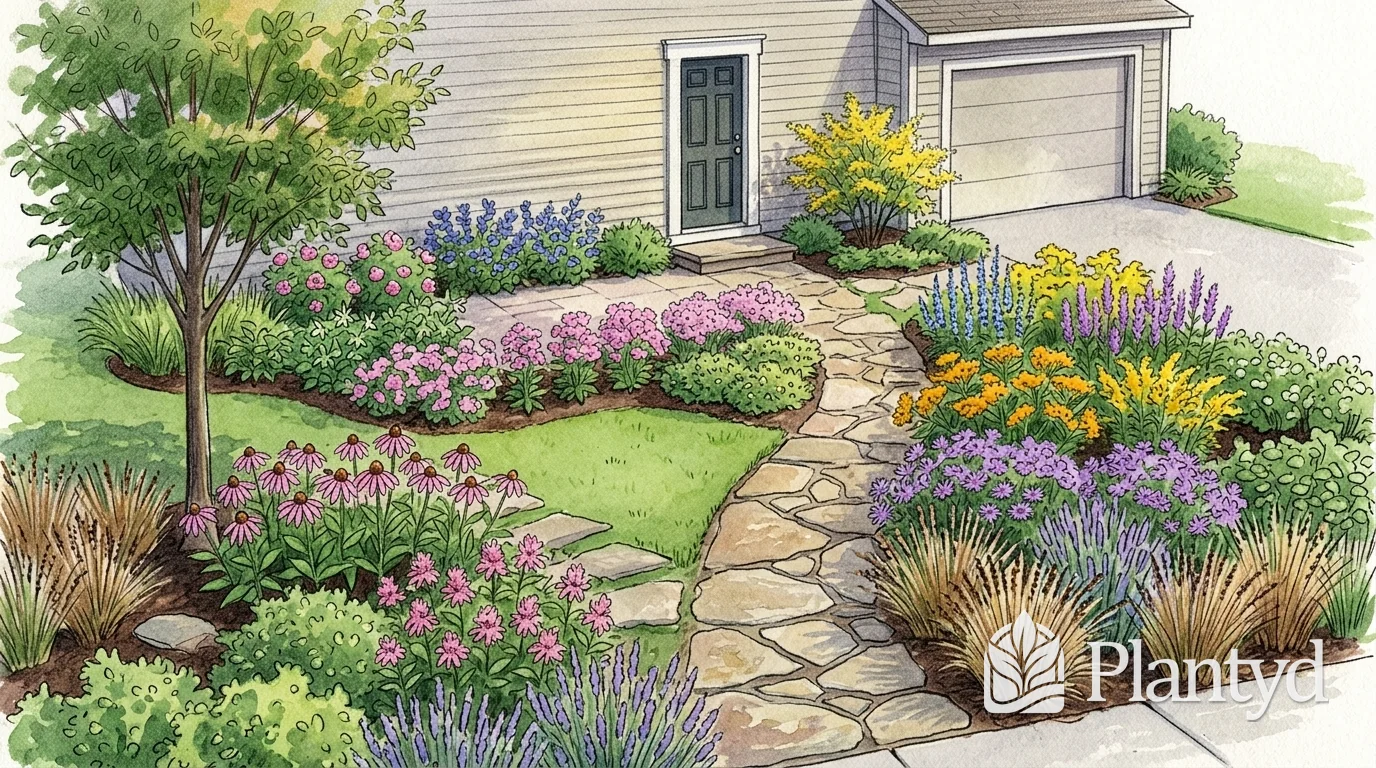 Front Yard Native Plant Garden Design That Still Looks Cared For
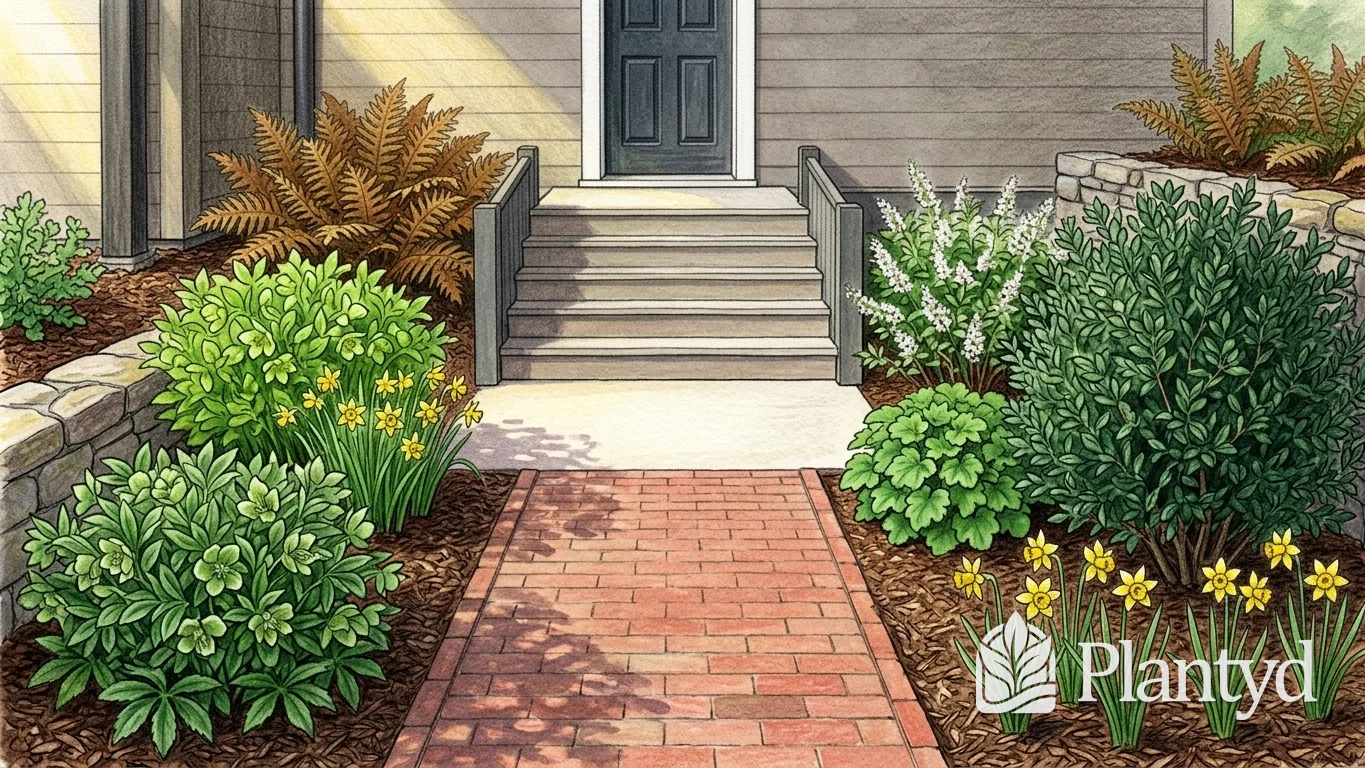 Narrow Front Yard Landscaping for a North-Facing Rowhouse
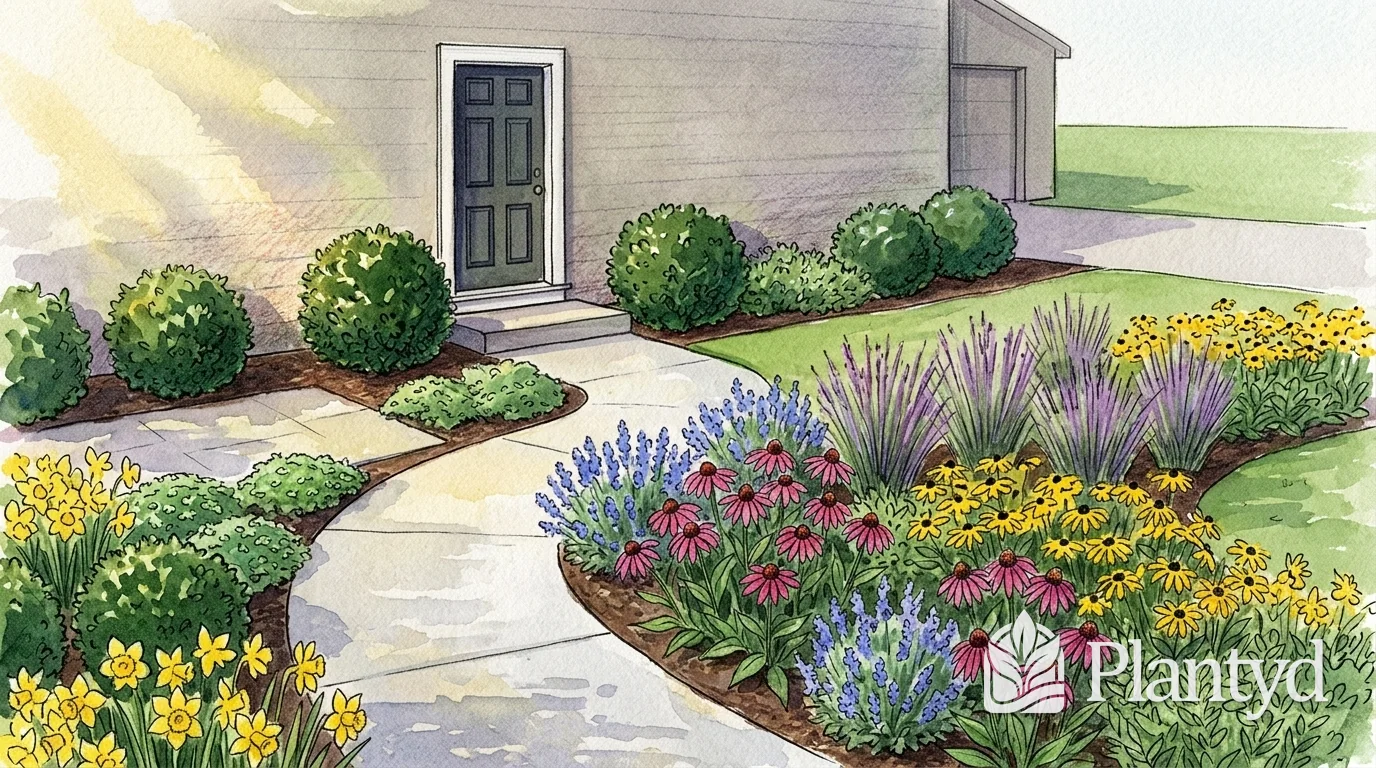 Cheap, Simple Front Yard Landscaping: Keep the Lawn, Buy the Plants Small
From the collection Front Yard Landscaping Ideas: 8 Plans, Drawn to Scale
Find where your tree's shade really falls
Sign up, trace your yard and your trees on its satellite photo, and see how many hours of sun each spot gets before you decide where the lawn ends.
Start designing freeNo credit card required · Free tier is free forever