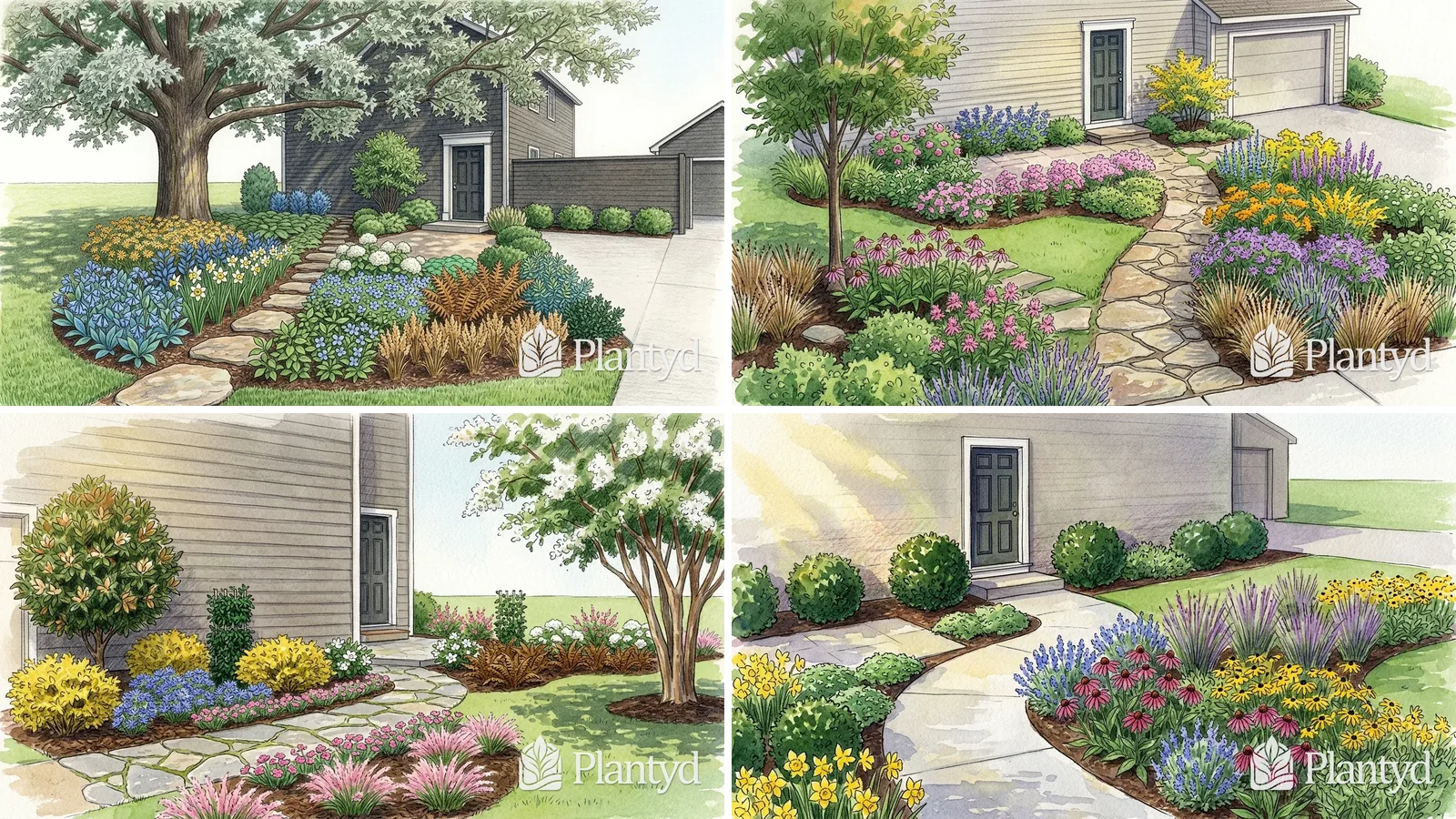
Most front yard ideas come as photos. Many of them are lovely, but a photo doesn't tell you how big the beds are, what the plants are called, or what the garden looked like the year it went in. It shows you someone else's yard on its best day, and you still have to work out what to put in your own.
These eight front yard landscaping ideas are drawn as real plans instead. Each one is for a particular house in a named city and zone, and each solves a different problem: a tiny lot, a north-facing rowhouse, a tight budget, a big oak, a prairie front yard, a long ranch house, a snowy winter and a hot porch. Every plan comes with its reasons, its sun map and a plan sheet you can download.
We built all eight as projects in Plantyd and ran Plantyd's sun analysis on each one, at planting and fifteen years later. Where the light showed a problem, we changed the plan. Find the one that matches your yard, print the sheet, and borrow the layout.
A small front yard where the paving comes first
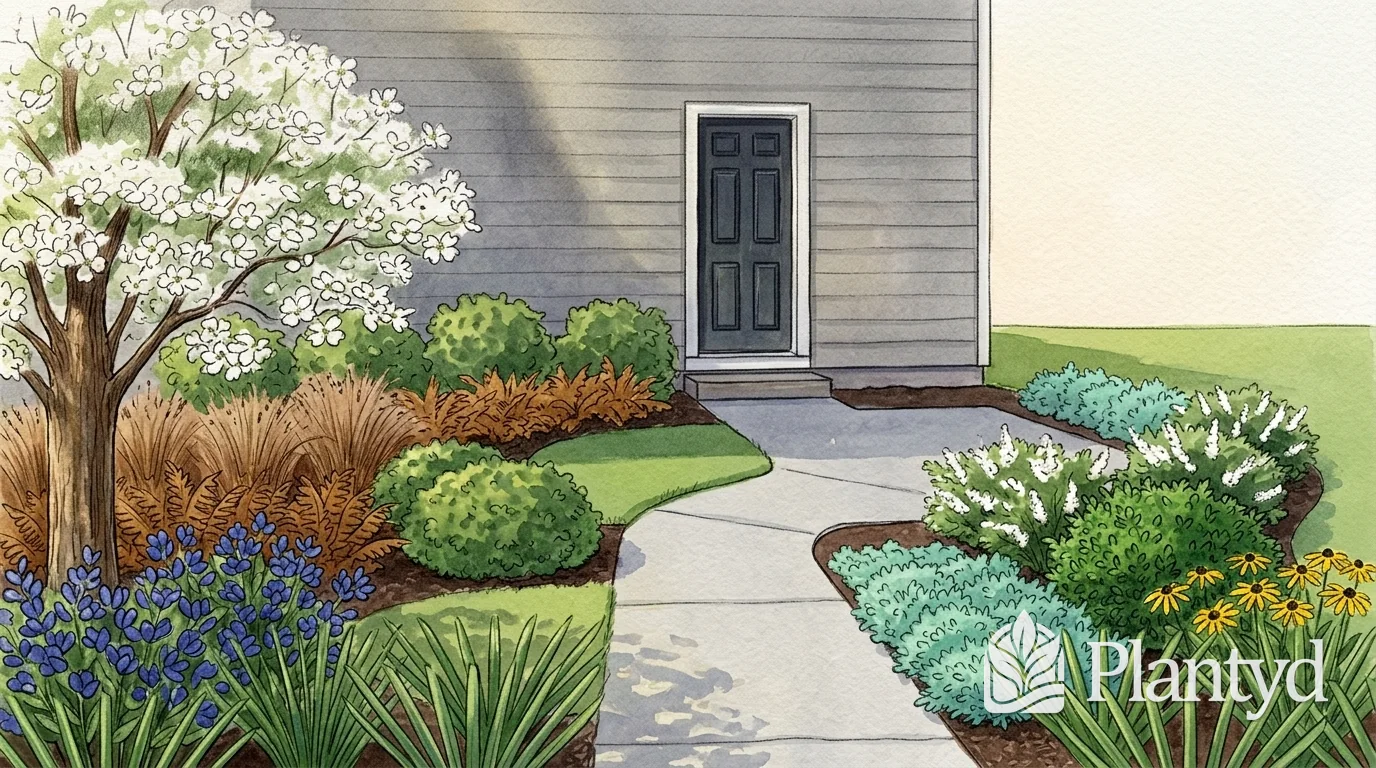
Pittsburgh, Pennsylvania, zone 6b. A front yard 24 feet deep. In a yard this small, the walk matters more than the plants. This plan lays a straight brick walk and a small brick court with a bench, then places one dogwood so its shade falls on the seat. See the plan.
A north-facing rowhouse front that is shady most of the year
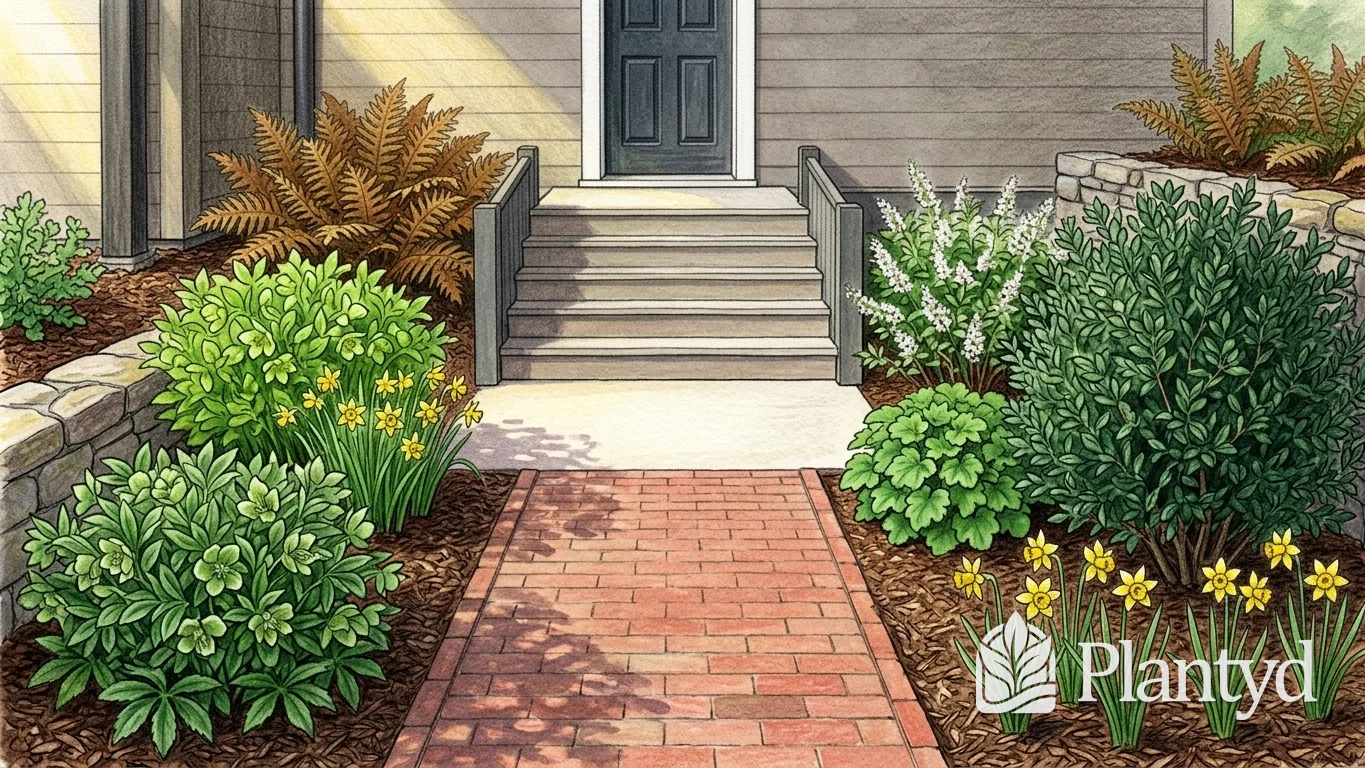
Philadelphia, zone 7b. An 18-by-13-foot rowhouse front. This front is bright in June and in the house's shadow from fall to spring. The plan puts hellebores by the door, ferns only in the corners that stay dim, and one narrow serviceberry at the sidewalk. See the plan.
A low-cost front yard that keeps the walk and the lawn
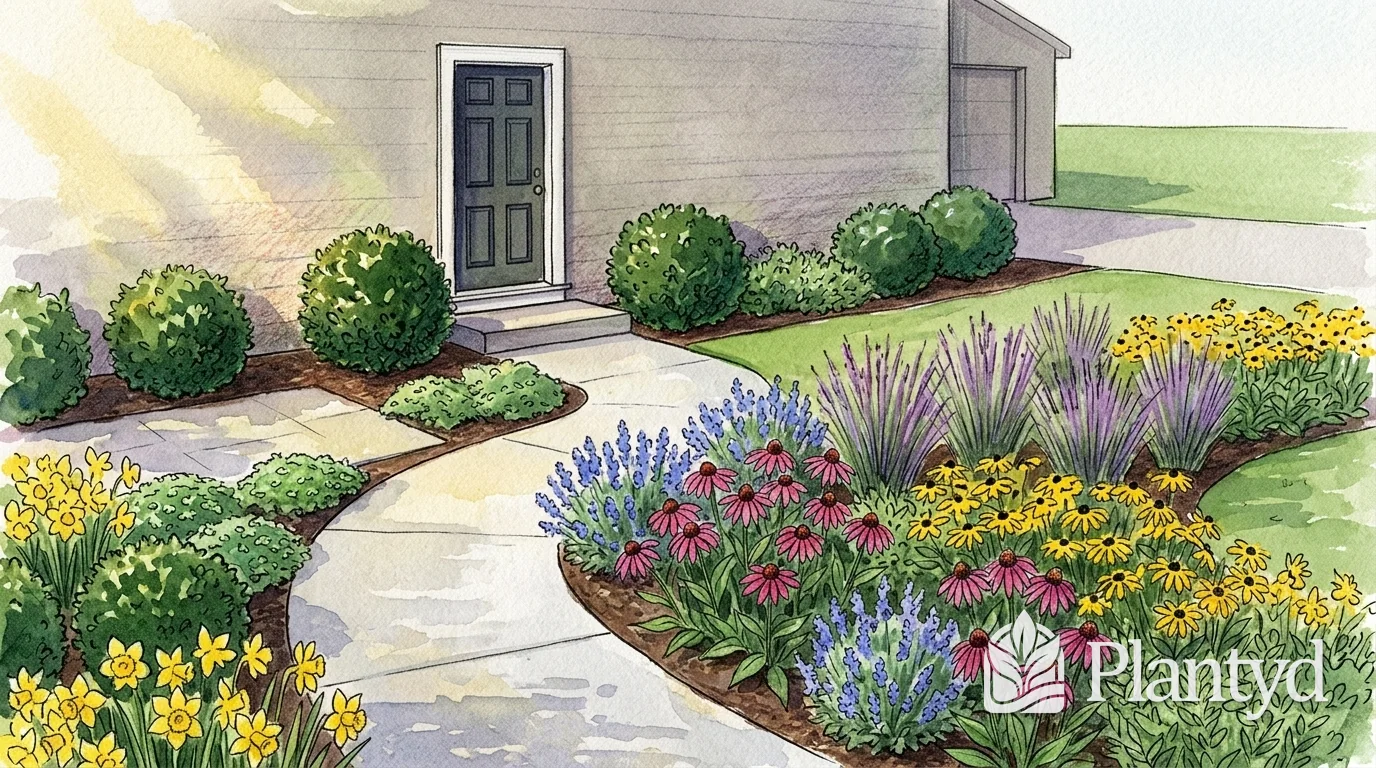
Columbus, Ohio, zone 6b. A 50-foot front with a walk and lawn worth keeping. This plan adds no new paving. It uses ten kinds of plants, buys two-thirds of them as plugs and quarts, and picks perennials you can divide to fill the next bed. The only shade plants, three ferns, wait about five years for the tree to grow. See the plan.
A front yard under a big oak, where grass won't grow
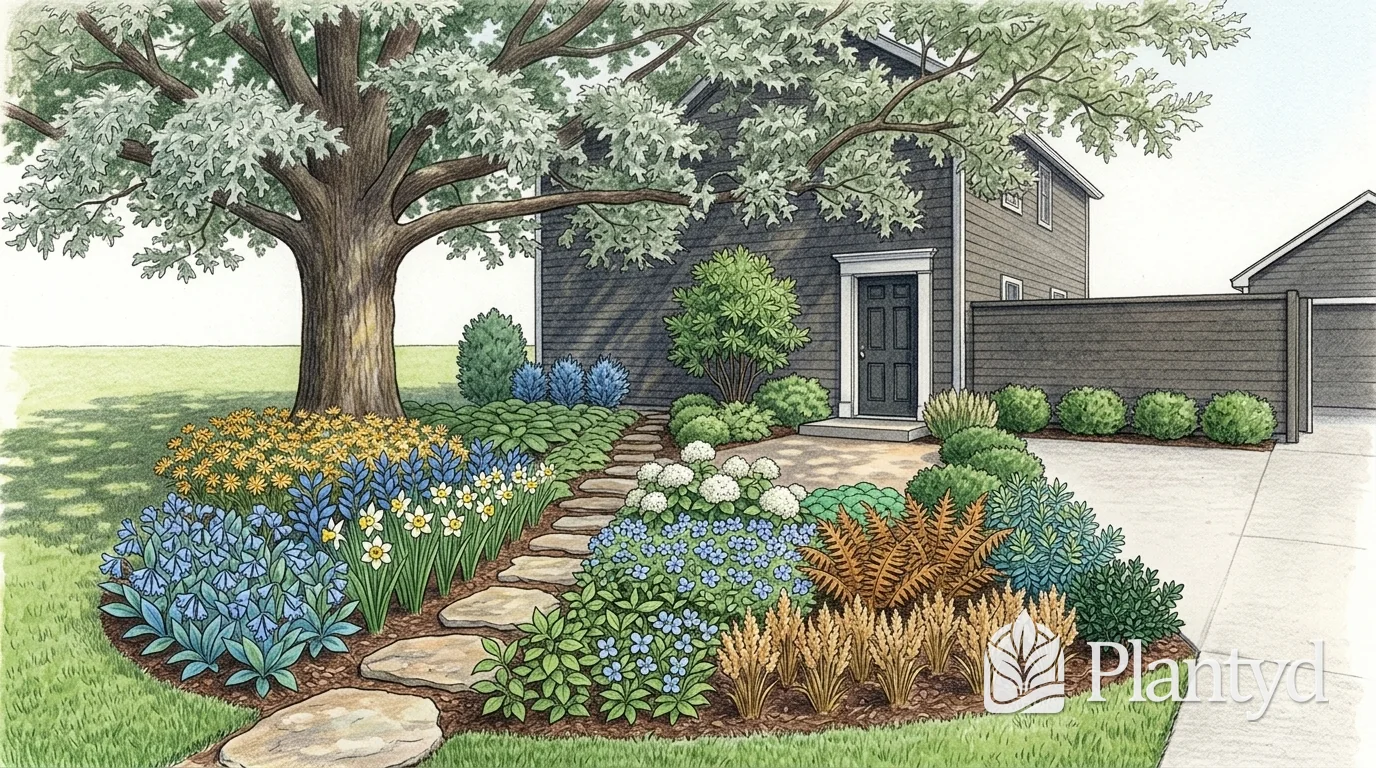
Baltimore County, zone 7a. A 65-foot red oak. If grass won't grow under your tree, this plan stops trying. The lawn ends at the oak's drip line, the edge of its canopy, where the sun stops. Under the canopy, woodland perennials go in as plugs between the roots, with no new soil on top. See the plan.
A native front yard that still looks cared for
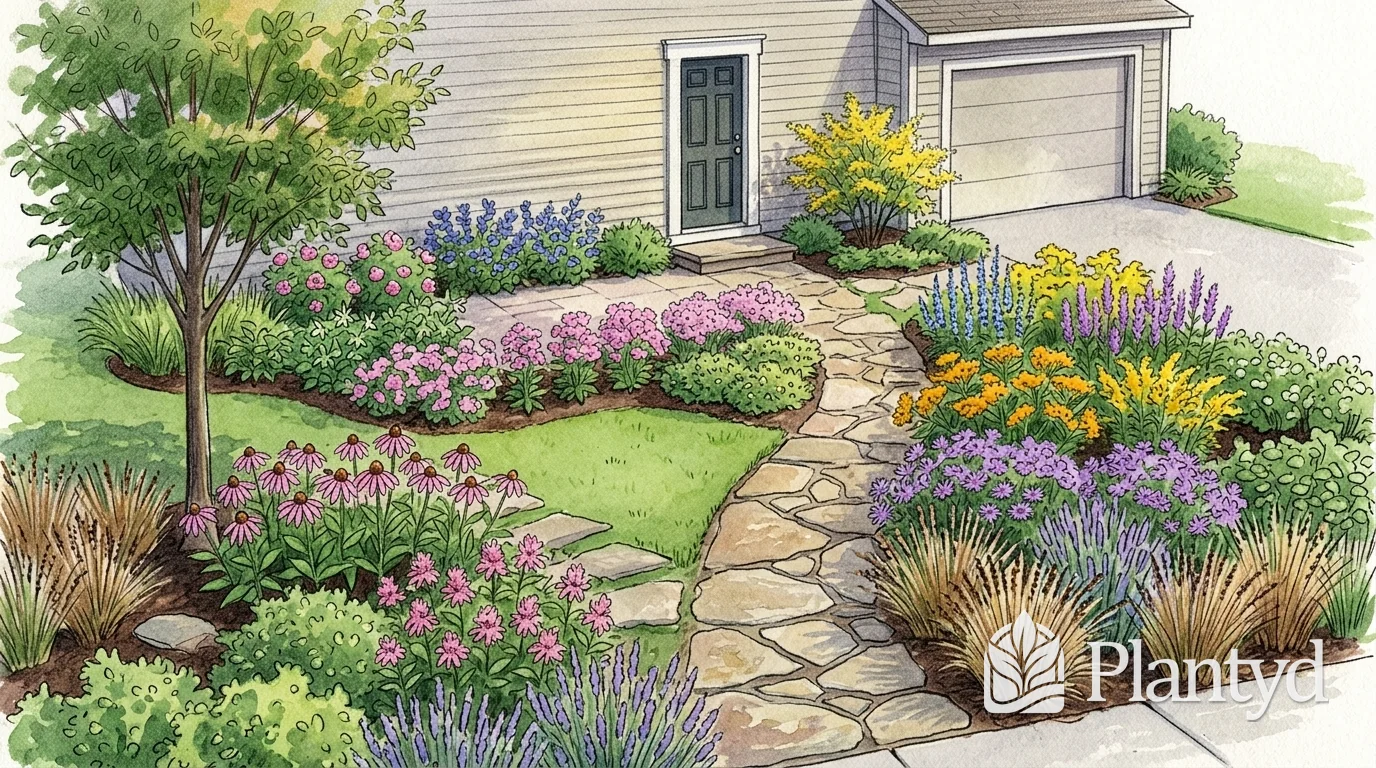
Madison, Wisconsin, zone 5b. Nineteen Wisconsin natives. A prairie front yard reads as a garden when it has clear edges. This plan gives it mown strips, a clean walk and low plants at the curb. Paths divide it into five beds, so no plant is more than about seven feet from somewhere to stand. See the plan.
A ranch house front yard that keeps the windows clear
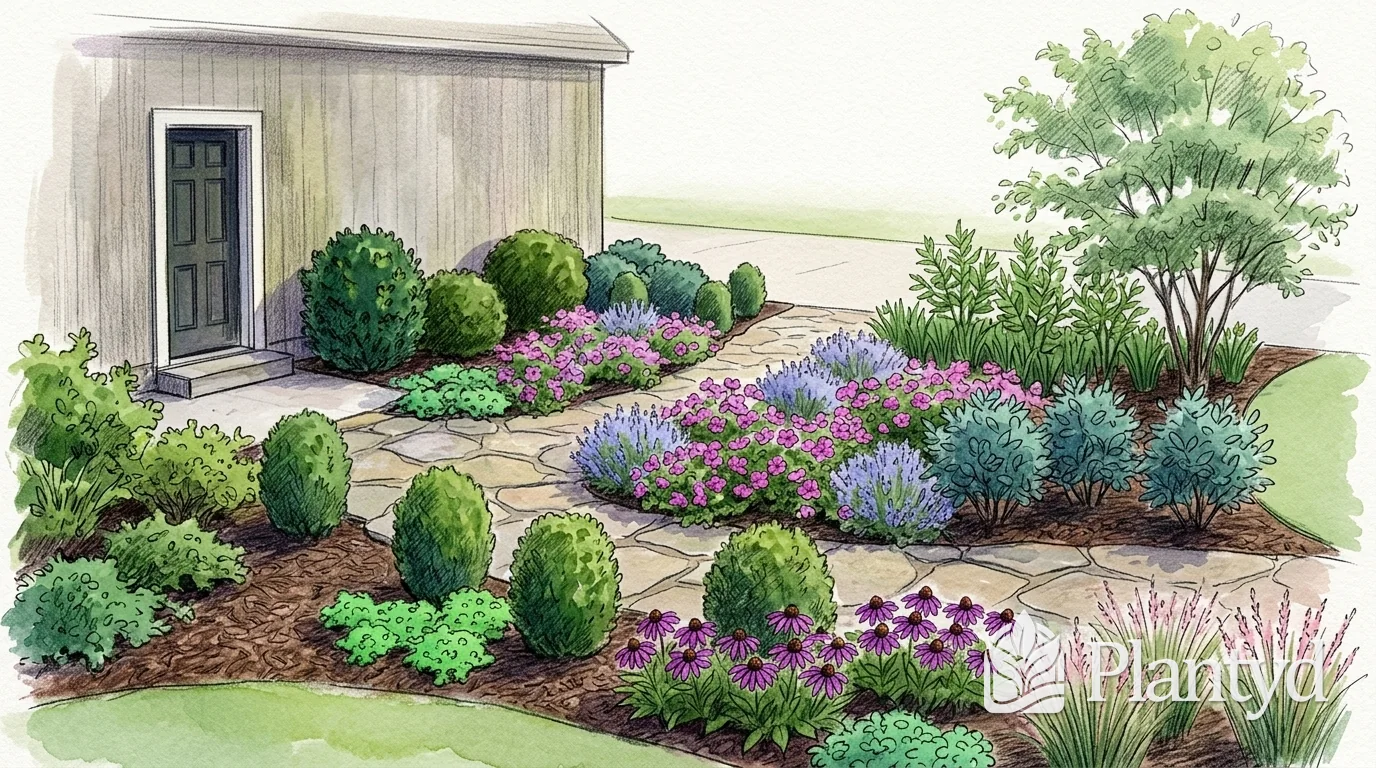
Central Maryland, zone 7a. A south-facing brick ranch. Most advice for a ranch house adds height. This plan keeps its two trees small and places them where their shade can land. It uses evergreens you can keep below the windows, and sun-loving plants by a door that faces south. See the plan.
A zone 4 front yard planned for February
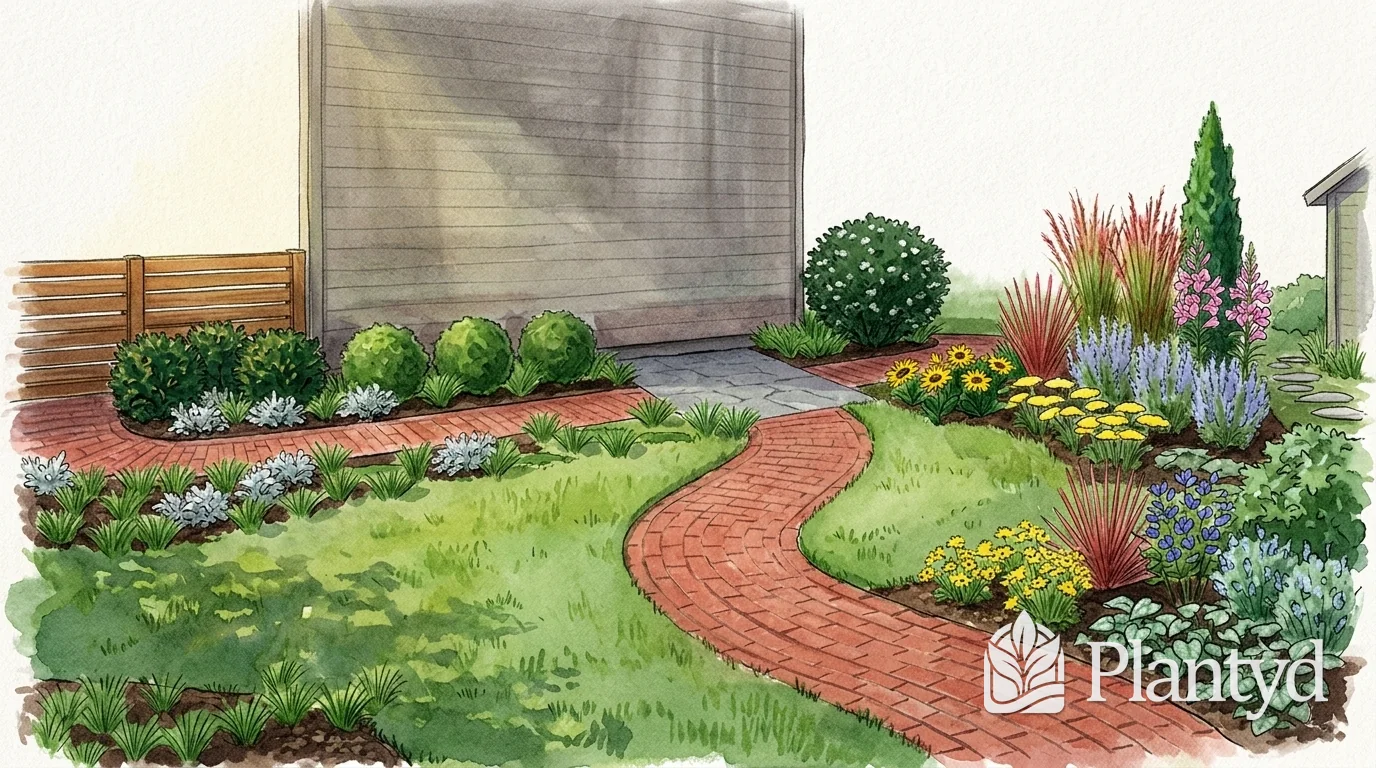
St. Cloud, Minnesota, zone 4b. A house facing east. Where snow sits from November to March, the winter view matters most. This plan puts an evergreen wall on the north side, red-twig dogwoods where the street can see their stems, and grasses that stay standing all winter. The spring garden goes under a native mountain ash, where its shade will be. See the plan.
A southern front yard with a hot west-facing porch
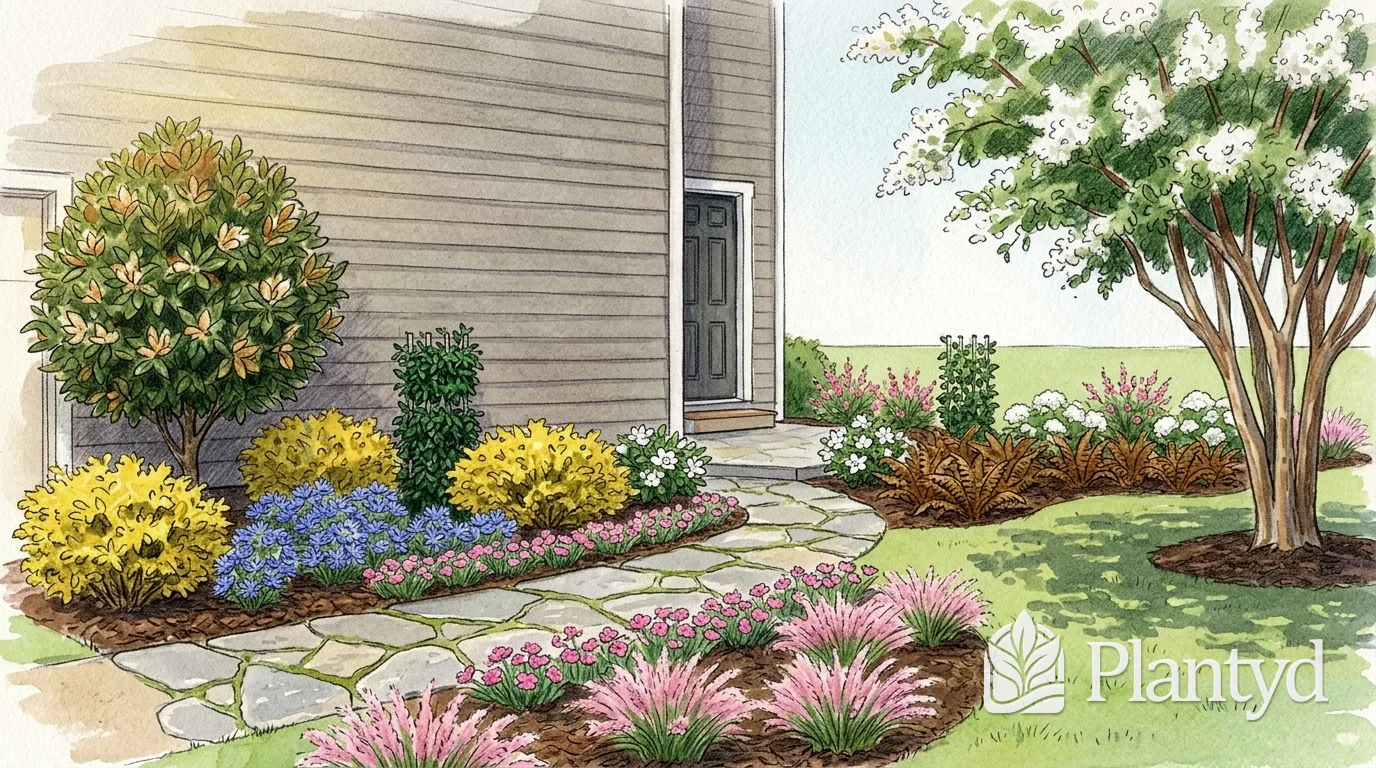
Raleigh, North Carolina, zone 8a. A west-facing porch. A west-facing porch bakes in the afternoon. This plan puts a crape myrtle out in the lawn, where it shades the south half of the porch on summer evenings. Evergreens that take the heat fill the beds, and something is in flower or berry every month of the year. See the plan.
Every plan is drawn for year fifteen
Each plan is drawn at the size the plants will reach, not the size they are when you buy them. None of the plans uses the invasive plants that are still common in front yards. Where one is the local habit, such as burning bush in Maryland or nandina in Raleigh, the plan says what to plant in its place.
If you want to check your own yard first, start with how much sun your yard gets, then how far apart to plant trees and shrubs.
Pick the plan closest to your own yard, and you start with a layout that has already been measured, drawn to scale and checked for sun fifteen years ahead.
Common questions
What can I plant in my front yard instead of grass?
Under a big tree, plant native woodland groundcovers such as Pennsylvania sedge, Allegheny spurge and Christmas fern. In full sun, plant low prairie plants and grasses in large groups, with a mown strip at the sidewalk so the yard reads as a garden. In a very small yard, skip the lawn and give the space to paving and beds.
Can I use these plans for free?
Yes. Each plan page has the full plan sheet as a PDF, drawn to scale with a plant list, and you don't need an account to download it. Print it to take to the nursery, or use it as a starting point for your own yard.
Do I need to change the plants for my area?
Often not, if you live in the same zone. Each plan says how far its plant list travels and which plants drop out beyond that. The way your house faces matters more. If it faces another way, the sun falls differently, and the shade plants have to move with it. Check your soil and your deer, too.
Draw your own front yard
Sign up, trace your yard on its satellite photo, and see where the summer sun falls on it now and fifteen years from now.
Start designing freeNo credit card required · Free tier is free forever