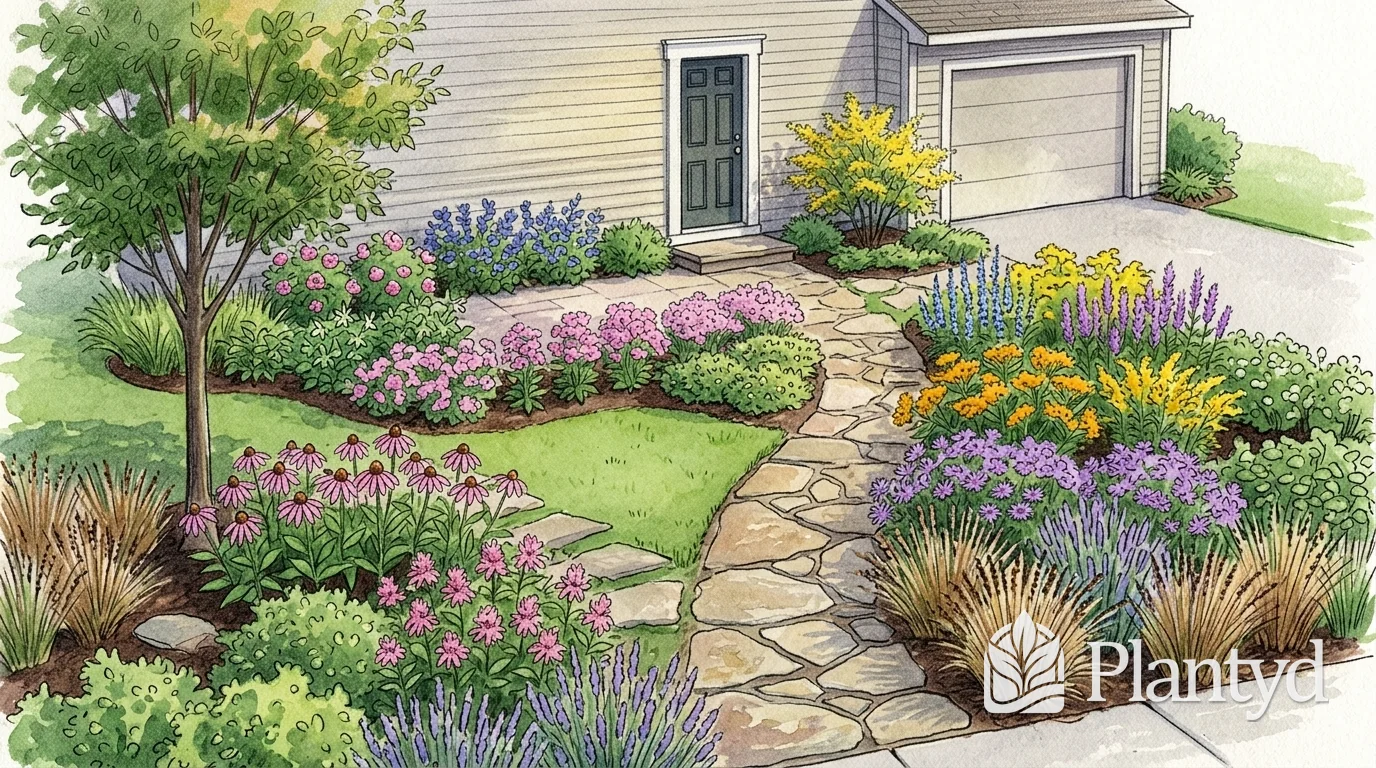
Plenty of people would like to trade the front lawn for native plants, with monarchs and goldfinches in July instead of the sound of a mower. What holds most of them back is the neighbors. Nobody wants to be the house whose prairie looks like a vacant lot from the sidewalk, or the one somebody calls the city about. But the plants are not what make a native yard look abandoned. A front yard of coneflowers and grasses reads as a garden when it has edges: a mown strip, a clean path, and low plants where people walk past.
This front yard native plant garden design is for a 1960s ranch house in Madison, Wisconsin, zone 5b. The front yard is 64 feet wide and 36 feet deep, and it faces south into full sun. The lawn is gone except for a mown strip along the sidewalk and the west lot line. Two walks and a stepping-stone path divide the yard into five beds, planted with nineteen kinds of Wisconsin native plants. Columbine and golden alexanders flower in May, butterfly weed and bergamot in July, and blazing star in August. Goldenrod and aromatic aster close the year in fall, and the grasses, seed heads and rose hips stand through the winter.
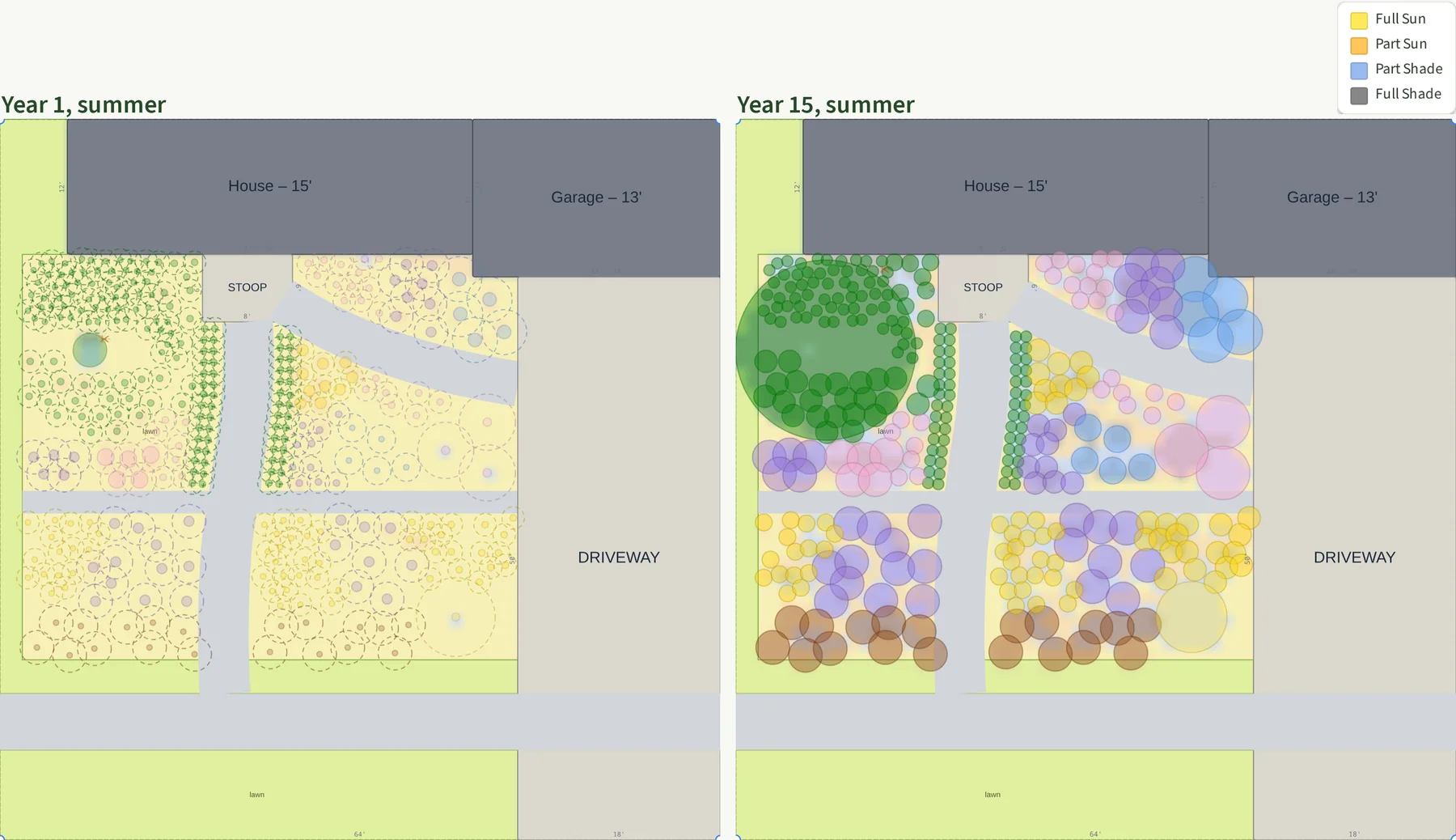
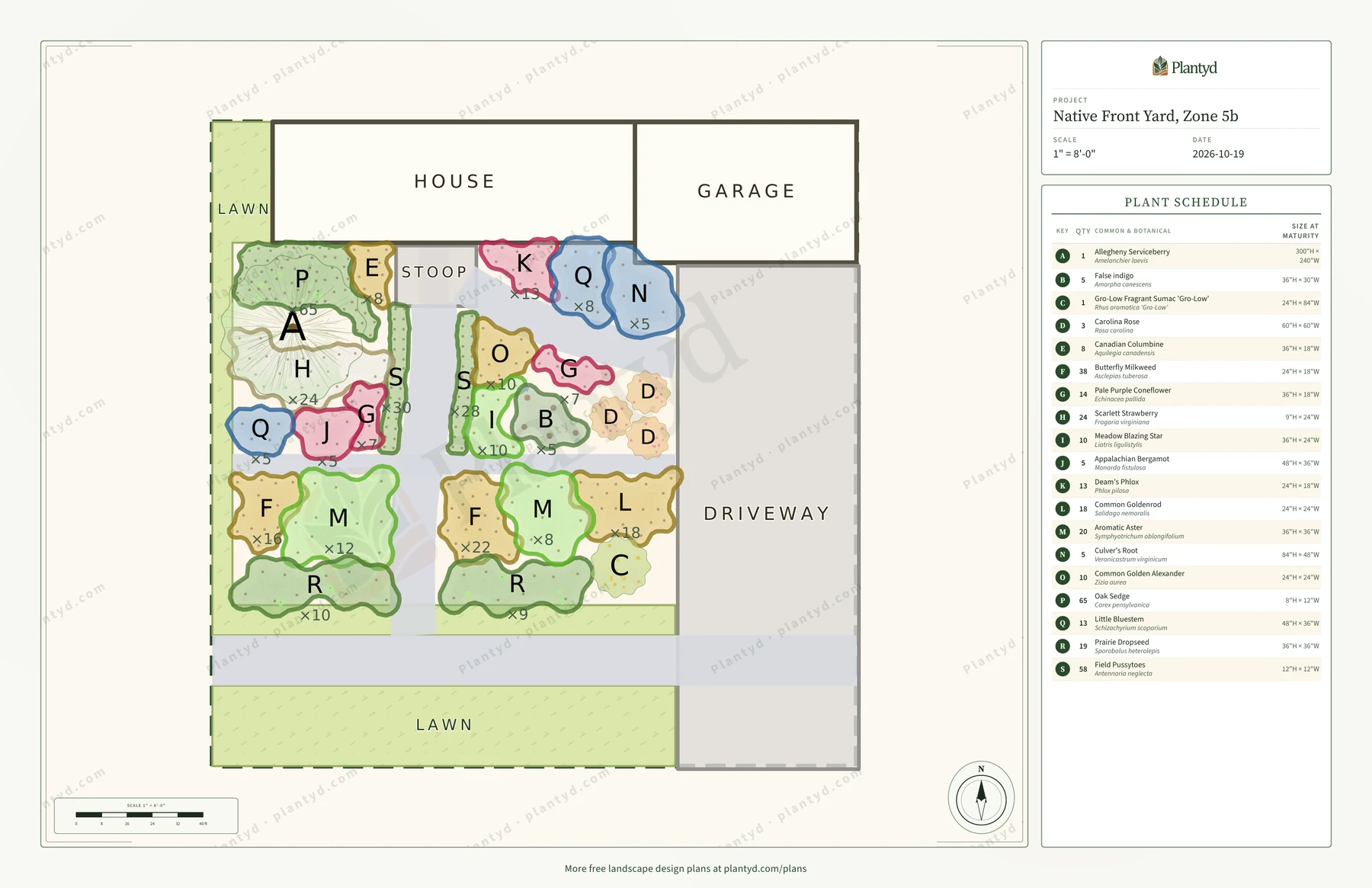
We built the plan as a real project in Plantyd and drew the edges before a single plant. Then we ran Plantyd's sun analysis out to year fifteen to see whether the one tree would shade the prairie. It doesn't, as long as the tree stands at the house corner. The analysis did move the wild columbine, as the section on the tree explains. You can download the plan sheet near the bottom of the page and take it to the nursery.
| Yard | 64 feet wide, 36 feet from the house to the sidewalk |
|---|---|
| House | 1960s ranch with an attached garage |
| Where | Madison, Wisconsin, USDA zone 5b |
| Faces | South: full sun across the front |
| Built for | No front lawn, and a yard the neighbors read as cared for |
| Plants | 19 kinds, 330 plants, all Wisconsin native species |
| Paving | Limestone stoop, two walks, a stepping-stone path, mown strips at the edges |
| Upkeep | Cut the perennials and grasses back in spring, leave the shrubs and tree, mow the edge strips |
Mown edges and low plants at the curb show the yard is cared for
The edges go in before any of the prairie. A mown strip runs along the sidewalk and down the west lot line. Two rows of prairie dropseed form a hem along the street. Two rows of pussytoes, a gray-green mat a few inches tall, edge the walk from the stoop.
Everything near the curb stays three feet tall or less: prairie dropseed, aromatic aster, butterfly weed and gray goldenrod. A 'Gro-Low' sumac holds the corner by the driveway, so you can still see the street when you back out. The tall plants, Culver's root, bergamot and the coneflowers, stand back toward the house, where their height looks planned.
Paths divide the yard into five beds you can reach
A whole yard of prairie in one bed is hard to read and hard to weed. Here the main walk, a second walk to the driveway and a stepping-stone path across the yard divide the planting into five beds. No plant is more than about seven feet from a place where you can stand to pull a weed.
No bed has more than five kinds of plants, not counting the groundcovers, and each kind goes in as a block. That is what makes the yard look planted on purpose. The stepping stones do one more job: they give the mail carrier a way across the yard that doesn't go through the butterfly weed.
The one tree stands at the corner that can take its shade
Prairie plants want sun, so the only tree, an Allegheny serviceberry, stands off the west corner of the house. Its shade falls north, onto the house wall. It flowers white in April and carries berries in June.
The sun analysis still moved the wild columbine. Our first draft had columbine all along the north side of the tree. At year fifteen, most of those plants got less than two hours of summer sun, which is too little for columbine to flower well. That ground is now a block of Pennsylvania sedge, which grows in full shade, and the columbine has the sunnier strip by the stoop.
Your yard won't match this one. If a street tree or a neighbor's maple shades part of your front yard, put the sedge in that patch and the prairie wherever the ground gets six hours of sun. Plantyd maps those hours on your own lot, now and with the trees at full size, so you can match the plants to them. Our guide to how much sun your yard gets shows how.
Tall plants go by the garage, and the grasses stand all winter
Little bluestem grows under the front windows. In lean soil it stays two to three feet tall, below most ranch-house sills, but in rich soil it grows taller and flops. It turns copper after the first frost and holds that color all winter, so it is what you see from the living room. Culver's root, the tallest of the perennials at five or six feet, stands against the blank garage corner, where it can't block anything.
There are no evergreen shrubs, and that is deliberate. This is a prairie, and its winter shape comes from grasses and seed heads left standing: little bluestem, prairie dropseed, the spires of Culver's root, coneflower cones and rose hips. In spring, cut the perennials and grasses back to a few inches of stubble, and leave the shrubs and the tree alone. A freshly cut prairie in April looks as tidy as a mown lawn.
Convert the lawn over three years
- This year, late summer. Build the walks and the stepping stones, cut the new edges, and plant the frame: the pussytoes, the dropseed hem, the bed against the house and the tree. Keep mowing the rest.
- Next year. Remove the turf from the two beds by the street with a sod cutter, or smother it for a full season under overlapping cardboard and a thick layer of wood chips. Plant those beds in fall or the following spring.
- The year after. Do the same for the two middle beds.
Plant plugs rather than seed. The first summer, the beds are mostly mulch. By the third summer, most plants are full size and the gaps are closing. To space the plugs, use the mature-spread rule in how far apart to plant trees and shrubs. It works for plugs too.
The plan works one zone colder or warmer
In our plant library, every kind here except wild strawberry is rated for zones 4 through 8, and wild strawberry grows wild well into Canada. Outside the upper Midwest, hardiness is the easy part. Before you buy, check which of these plants are native to your state.
On a smaller lot, shrink the middle of the plan, not the frame. Keep the mown strip, the walk, the pussytoes edging and the low beds at the curb, and plant fewer blocks in the beds behind them.
Deer are the hazard to plan for. Rutgers' ratings of deer-resistant plants list phlox as occasionally severely damaged and strawberries as frequently severely damaged. Fragrant sumac and little bluestem are rarely touched.
Buy the plants nursery-grown, by their botanical names
The letters in the list match the plan sheet. Every plant is native to Wisconsin and rated to zone 5b or colder. Two of them are scarce in the wild there. Pale purple coneflower is a state-threatened plant, and fragrant sumac is a species of special concern. Both are easy to buy as nursery-grown plants, so buy them that way, and never dig them from a roadside or a remnant prairie.
| Key | Qty | Plant | Size at maturity | Its job in the plan |
|---|---|---|---|---|
| A | 1 | Allegheny serviceberry Amelanchier laevis | 20 ft tall, 16 ft wide | The one tree, at the house corner, so its shade falls on the wall. White April flowers, June berries |
| B | 5 | Leadplant Amorpha canescens | 3 ft tall, 2.5 ft wide | Silvery prairie shrub with purple spikes in July |
| C | 1 | Fragrant sumac 'Gro-Low' Rhus aromatica 'Gro-Low' | 2 ft tall, 7 ft wide | Low shrub at the drive mouth that keeps the sightline clear. It spreads by suckers to about seven feet, and the drive and walk hold it in. Orange-red in fall |
| D | 3 | Pasture rose Rosa carolina | 5 ft tall, 5 ft wide | Single pink roses in June, red hips through winter. Usually two to three feet in a dry bed. It spreads by suckers, so pull any that cross the path |
| E | 8 | Wild columbine Aquilegia canadensis | 3 ft tall, 18 in wide | Red and yellow nodding flowers in May, by the stoop |
| F | 38 | Butterfly weed Asclepias tuberosa | 2 ft tall, 18 in wide | Orange in July, a monarch host plant, low at the curb |
| G | 14 | Pale purple coneflower Echinacea pallida | 3 ft tall, 18 in wide | Drooping pink petals in June, cones for winter |
| H | 24 | Wild strawberry Fragaria virginiana | 9 in tall, 2 ft wide | Native groundcover under the south side of the tree. White spring flowers, and runners that the walk keeps in bounds |
| I | 10 | Meadow blazing star Liatris ligulistylis | 3 ft tall, 2 ft wide | Purple spikes in August that draw monarchs |
| J | 5 | Wild bergamot Monarda fistulosa | 4 ft tall, 3 ft wide | Lavender in July, back toward the house |
| K | 13 | Prairie phlox Phlox pilosa | 2 ft tall, 18 in wide | Pink in late spring, at the narrow end by the stoop |
| L | 18 | Gray goldenrod Solidago nemoralis | 2 ft tall, 2 ft wide | A short goldenrod for the curb beds. Yellow in September |
| M | 20 | Aromatic aster Symphyotrichum oblongifolium | 3 ft tall, 3 ft wide | Lavender-blue from September into October, the last flowers of the year |
| N | 5 | Culver's root Veronicastrum virginicum | 7 ft tall, 4 ft wide | White spires in July, against the blank garage corner |
| O | 10 | Golden alexanders Zizia aurea | 2 ft tall, 2 ft wide | Yellow umbels from mid-May, among the first prairie flowers |
| P | 65 | Pennsylvania sedge Carex pensylvanica | 8 in tall, 12 in wide | Fine green groundcover in the shade north of the tree |
| Q | 13 | Little bluestem Schizachyrium scoparium | 4 ft tall, 3 ft wide | Under the windows. Copper all winter |
| R | 19 | Prairie dropseed Sporobolus heterolepis | 3 ft tall, 3 ft wide | A low grass hem along the street |
| S | 58 | Field pussytoes Antennaria neglecta | 12 in tall, 12 in wide | Two rows of gray-green edging along the walk |
Take out the lawn in the middle, keep a three-foot strip of it along the sidewalk, and the neighbors will see a garden that someone looks after.
Common questions
Can you replace a front lawn with native plants without breaking city rules?
Check your city's rules first. Many cities treat a planted bed differently from unmowed lawn, and some limit how tall plants can grow on the strip between the sidewalk and the street. This plan leaves that strip as mown grass and keeps the planting inside clear edges, so nobody mistakes it for neglect.
How do you replace a front lawn with native plants?
Do it in stages. Build the paths and edges and plant the frame first, then convert the lawn one bed at a time over two or three years. Remove the turf with a sod cutter, or smother it for a full season, and plant plugs rather than seed, so most plants reach full size by the third summer.
Do native prairie plants need watering?
Water the plugs through their first summer and through dry spells in the second. Give the serviceberry a deep soak in dry weeks for its first two summers. After that, the plants in this plan get by on normal Wisconsin rainfall, and many of them handle dry spells better than a lawn does.
More plans like this
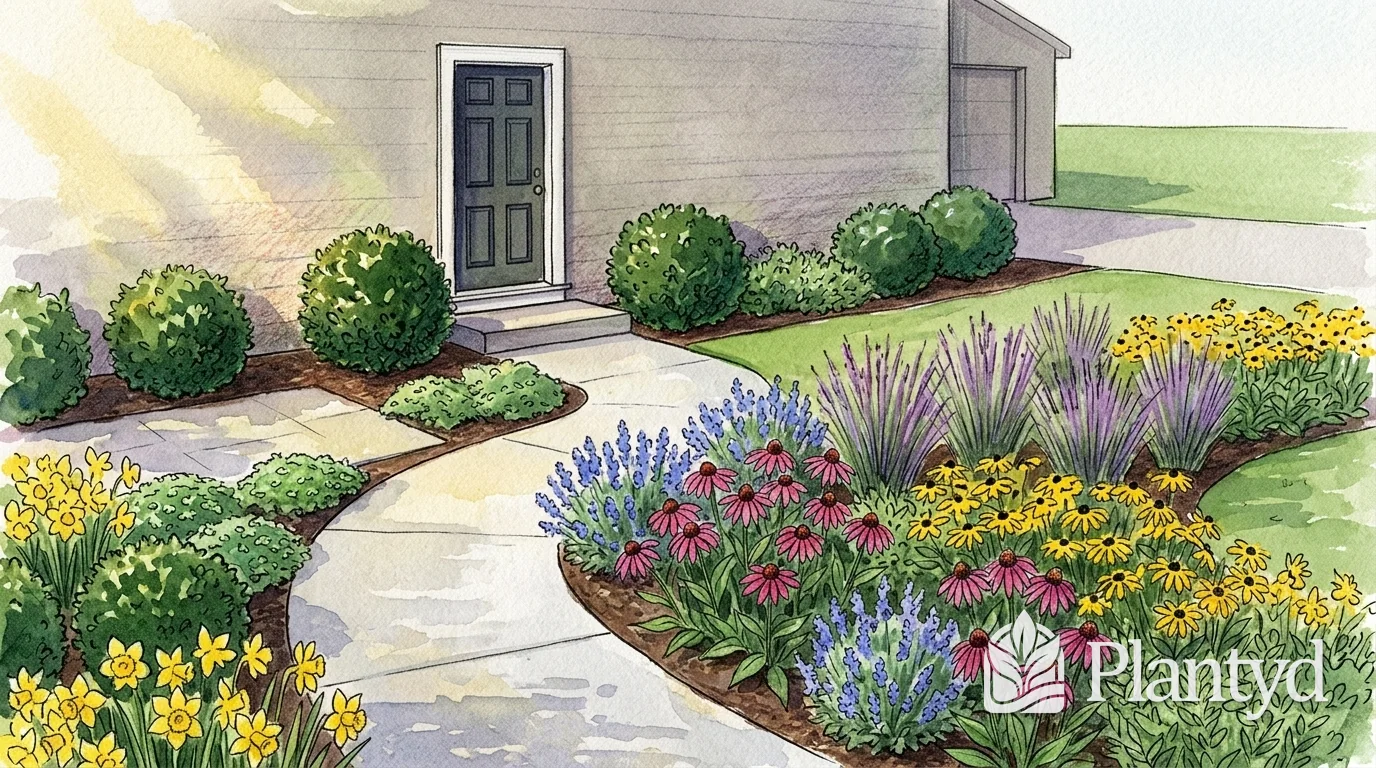 Cheap, Simple Front Yard Landscaping: Keep the Lawn, Buy the Plants Small
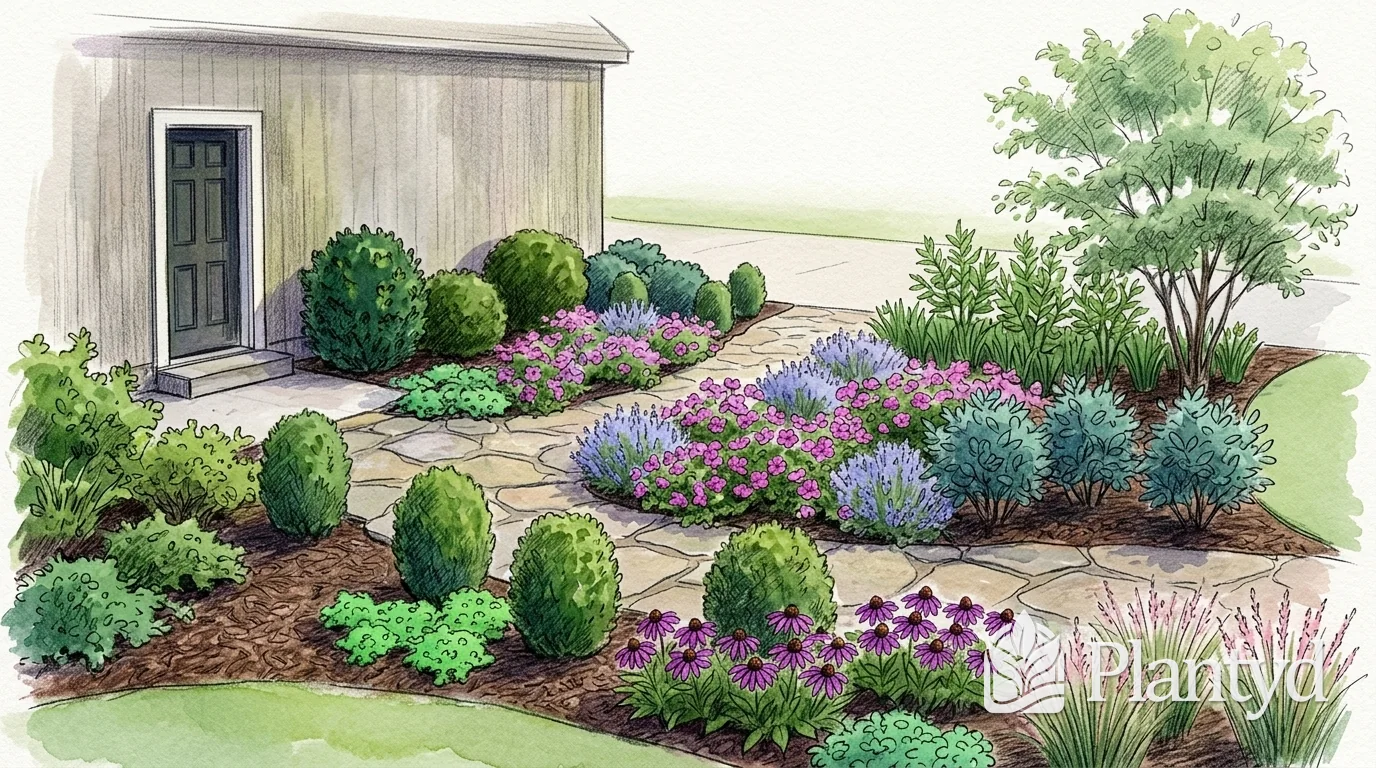 Front Yard Landscaping for a Ranch House Without Hiding the Windows
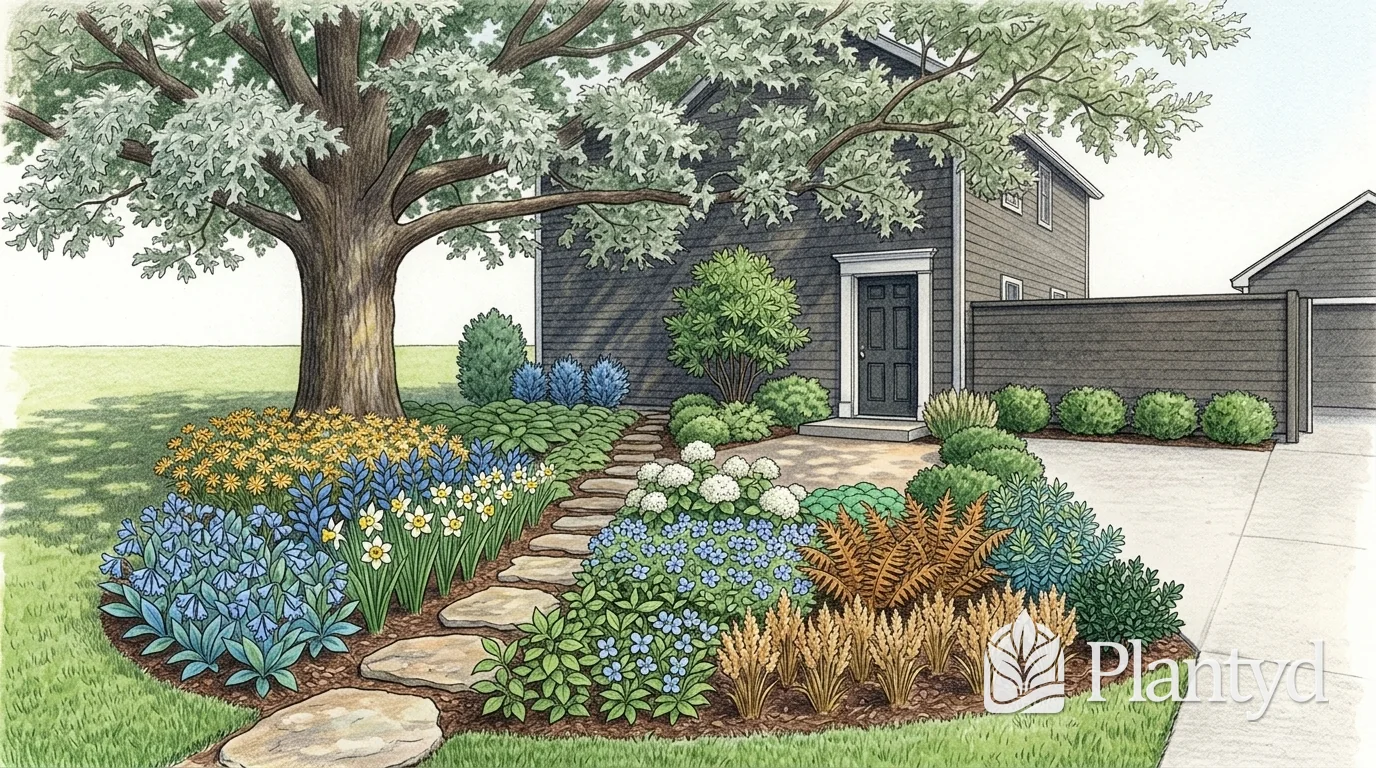 Shade Front Yard Landscaping: What to Plant Under a Big Oak
From the collection Front Yard Landscaping Ideas: 8 Plans, Drawn to Scale
From the collection Native Plant Garden Design: Six Plans for Sun, Shade and Wet Ground
Draw your own lawn conversion
Sign up, trace your yard on its satellite photo, and plan which beds go first, with the sun on every one of them worked out.
Start designing freeNo credit card required · Free tier is free forever