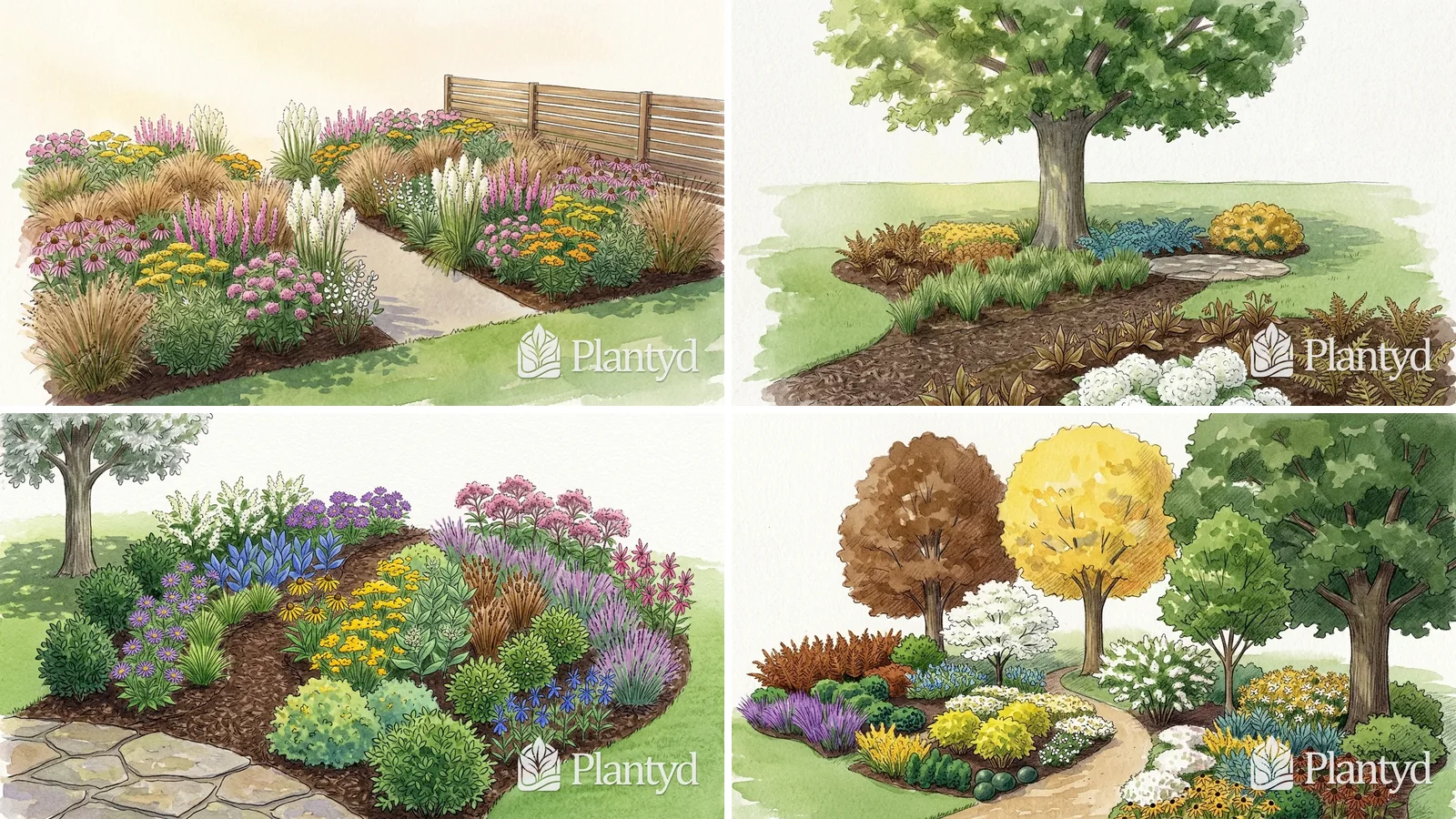
Most native gardens start with a list. You come home from the plant sale with a flat of plugs and a printed list from the extension office: coneflower, little bluestem, golden alexanders and Christmas fern. The list tells you what grows in your area, but it doesn't tell you where any of it goes.
These six plans do that part. Each native plant garden design below is a Plantyd project for one yard, from a backyard in Ames, Iowa, to an old oak in Knoxville, Tennessee, with every plant placed, counted and drawn at the size it will reach. Each one comes with its sun map, its plant list and a PDF plan sheet you can download.
We checked every plan with Plantyd's sun map at planting and at year fifteen, and moved plants wherever the hours came up short. To choose one, start with your own light. In full sun on ordinary soil, look at the meadow, the pollinator island or the front yard. If a downspout floods a corner, look at the rain garden. If your lot backs onto big trees, look at the woodland edge, and if you have one big tree out in the yard, look at the old-oak bed.
A backyard meadow planted from one repeating block
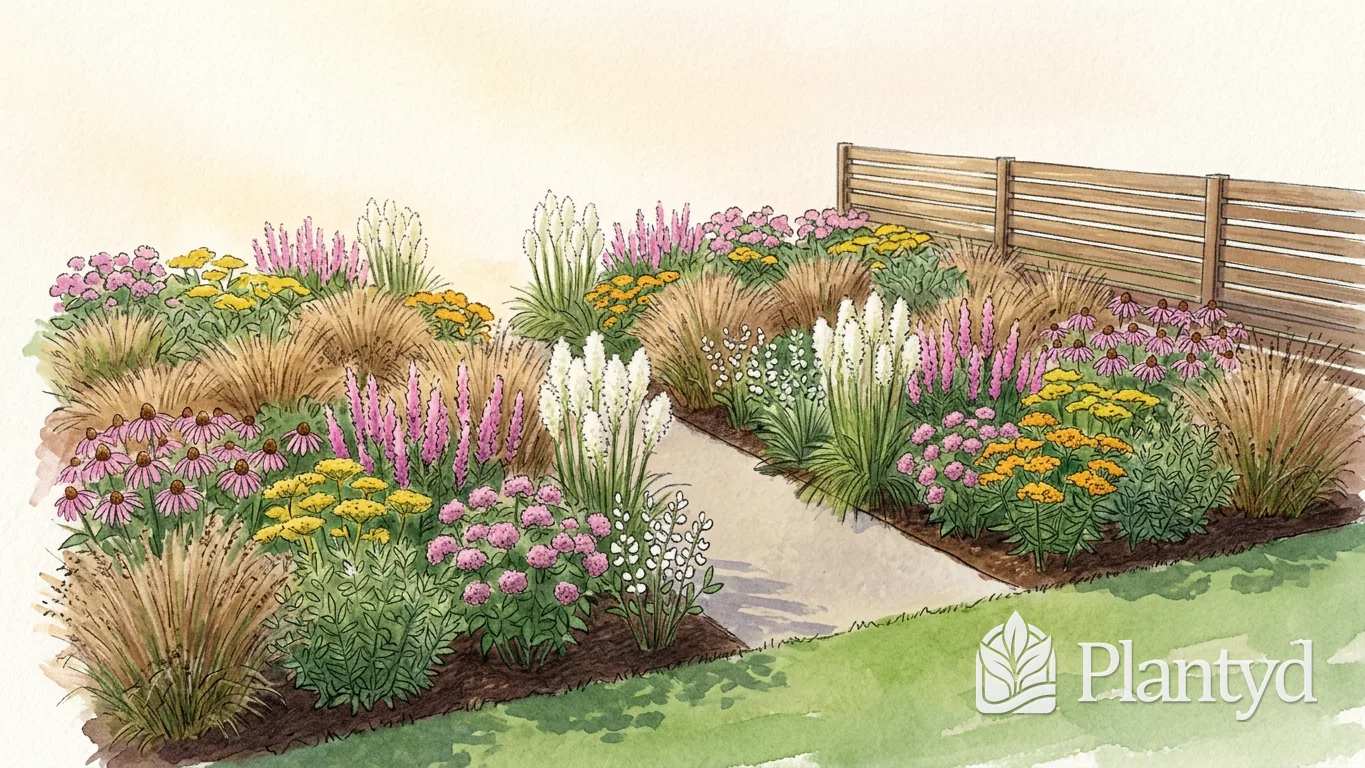
Ames, Iowa, zone 5b. Two 20-by-36-foot beds behind a south-facing house. A meadow fails in the gaps between the flowers. In this plan, prairie dropseed fills the ground between five drifts of Iowa natives, a line of blue aster runs from corner to corner, and two more plants are dotted through. The same 20-by-12-foot block repeats six times, mirrored in the east bed, so the close-up sheet is the only one you need to stake out. Go to the plan.
A pollinator island bed you can see from every side
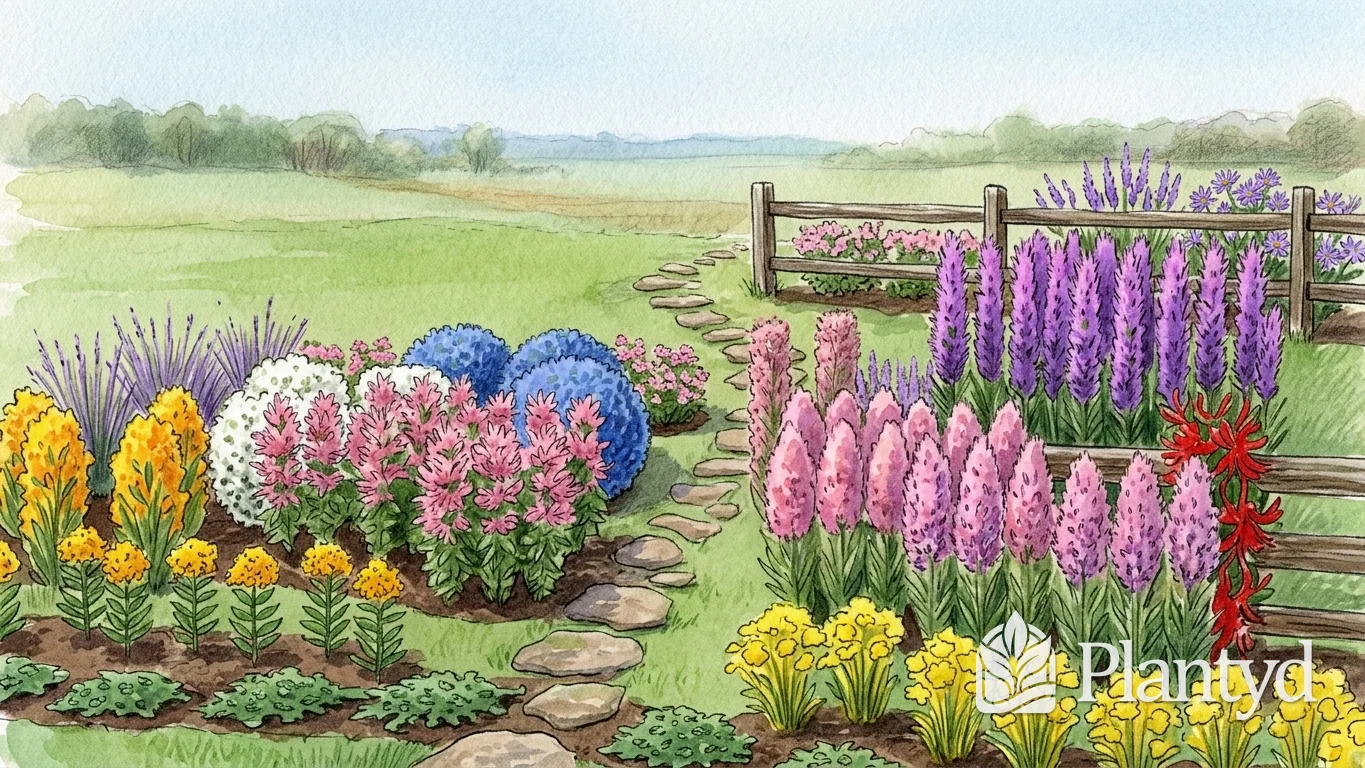
Lancaster, Pennsylvania, zone 7a. A 42-by-19-foot island. A bed out in the lawn has no back row, because you see it from every side. This plan runs the tall plants along its spine, and every edge drops to blazing star, golden alexanders or butterfly weed. Plants for caterpillars get room beside the nectar plants, and the sun check moved the serviceberry out onto the grass. Go to the plan.
A rain garden sized from the roof and placed by the sun
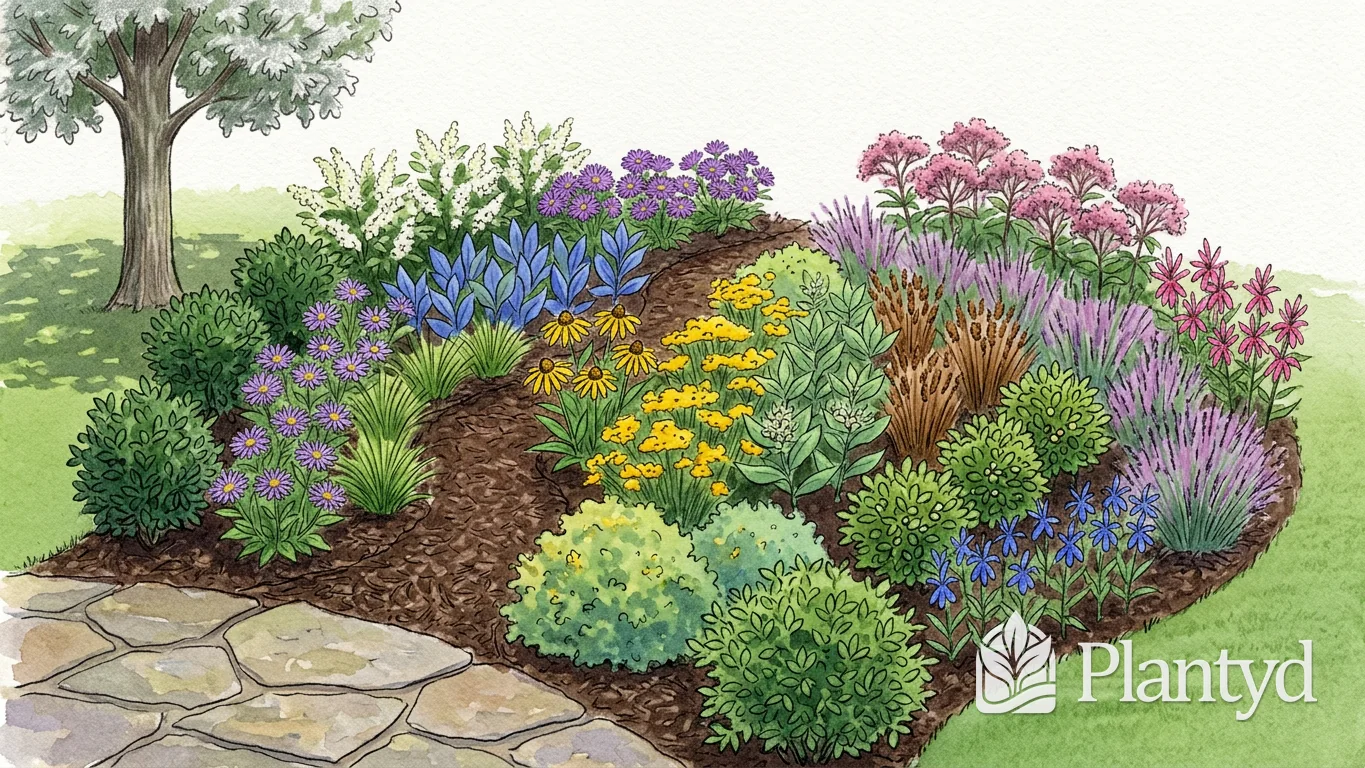
Princeton, New Jersey, zone 7a. One downspout and about 750 square feet of roof. A rain garden has to hold the water its downspout sends it. On silty soil, New Jersey's rain garden manual sizes this one at 150 square feet and 6 inches deep. Where the runoff already went, the oak and the house left only two to six hours of sun, so the garden moved south to ground that gets seven hours or more. Go to the plan.
A woodland edge planted for the birds
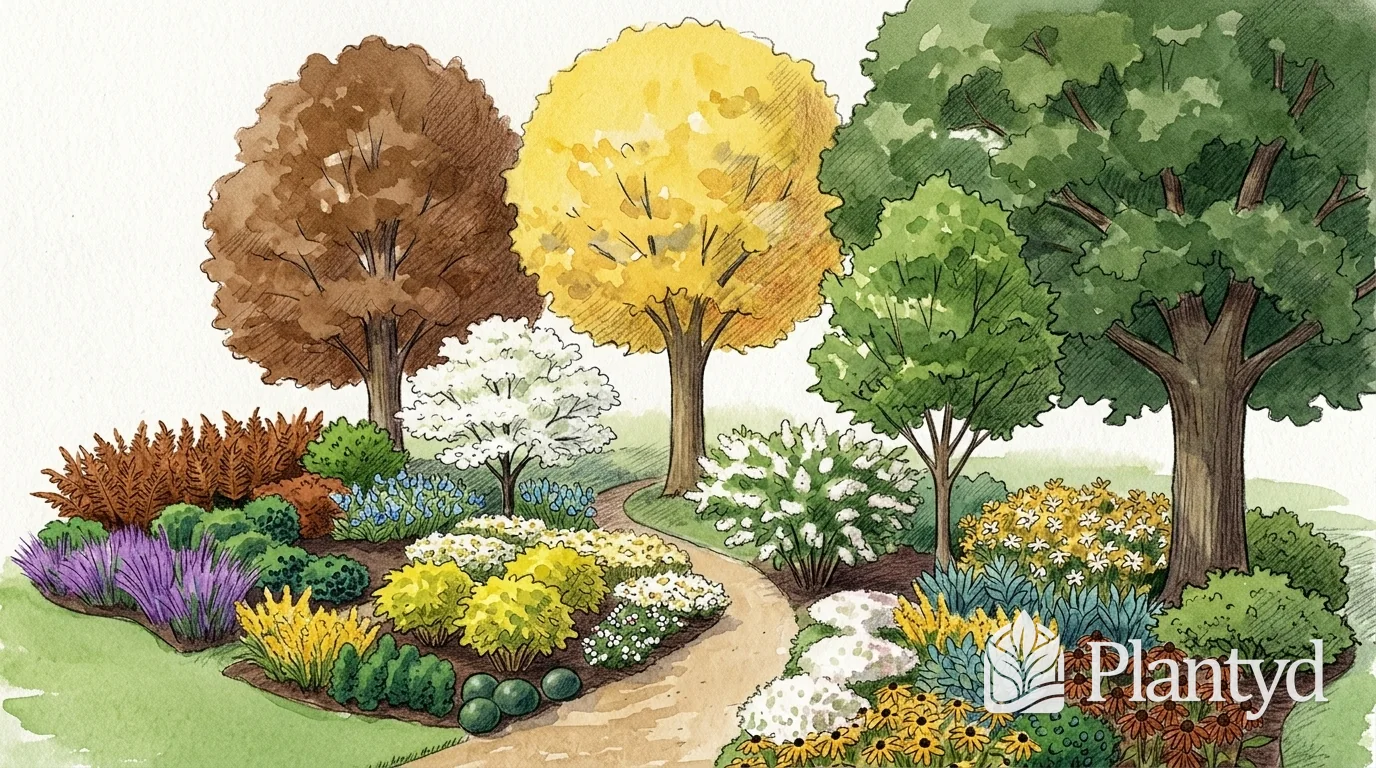
Skillman, New Jersey, zone 7a. A back lawn against three big trees. Where a lawn meets big trees, birds want berries, cover and seed. Plantyd's sun map showed shade only under the tree crowns, so the ferns go there. A small tree fills each gap between the crowns, and berry shrubs step down to meadow flowers at the lawn, so something is ripe from June to March. Go to the plan.
A shade bed under an old oak, planned from the kitchen window
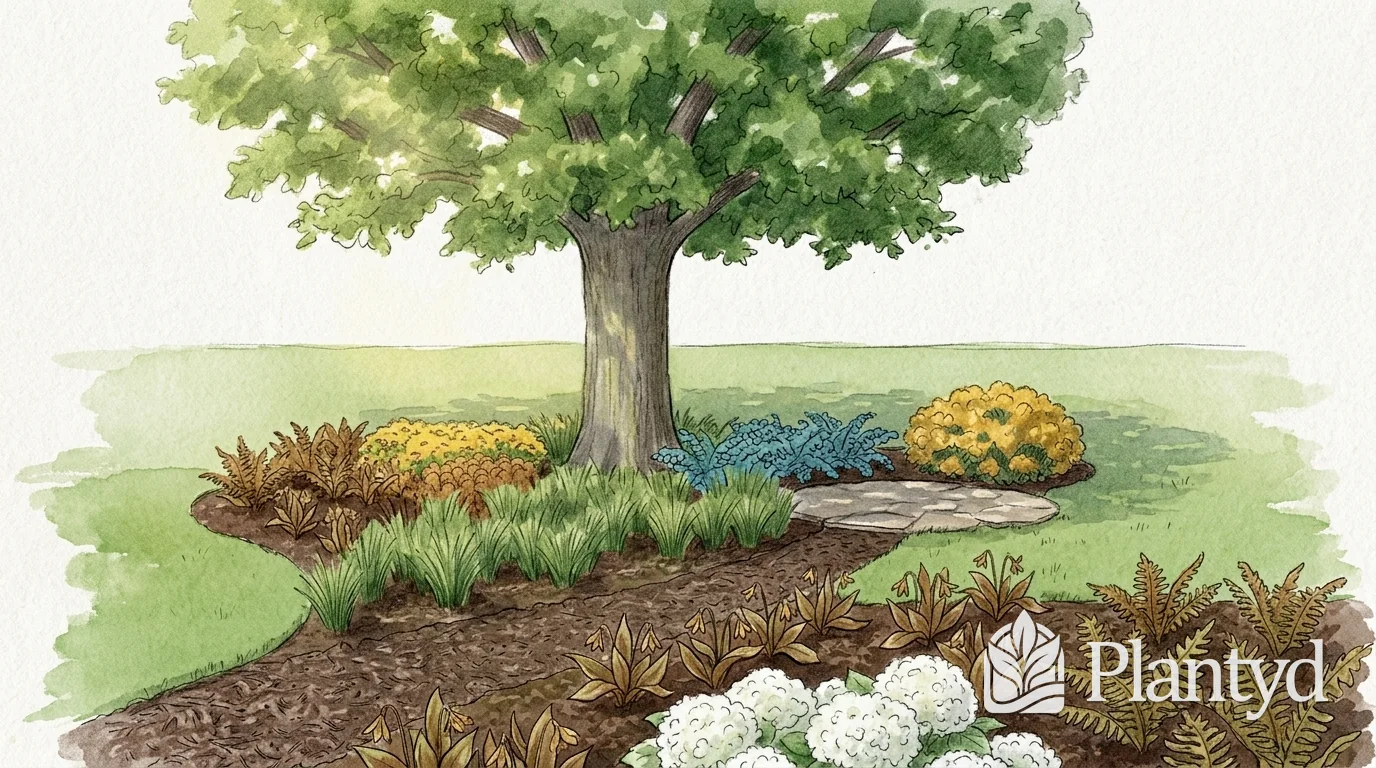
Knoxville, Tennessee, zone 7b. A 60-foot white oak behind the house. Under a big oak, flowers come in short bursts, so this plan is laid out for the view from the kitchen window. Evergreens hold that view all winter, and ferns and sedges take over by July. The spring flowers finish before the oak's leaves fill in, and a bench under the tree gives you somewhere to sit in summer. Go to the plan.
A prairie front yard that still looks tended
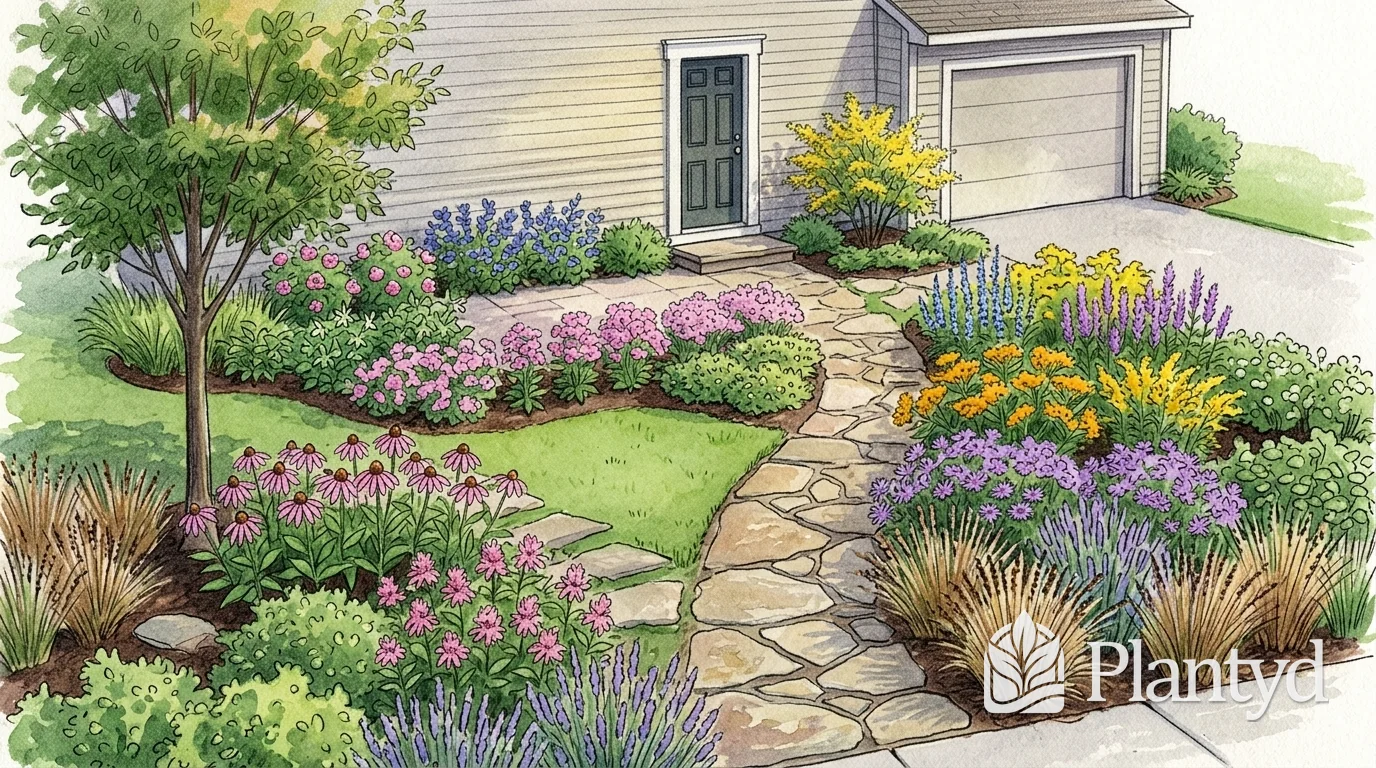
Madison, Wisconsin, zone 5b. 19 kinds of Wisconsin natives where the lawn was. A native front yard reads as a garden when it has edges. In this plan, low plants hold the curb and the tall ones stand back by the house. A walk and stepping stones divide the planting into five beds, edged with mown strips. Go to the plan.
Lay out a native garden by its light first
A native plant in the wrong light struggles like any other plant. A prairie plant under an oak grows leggy and flowers poorly, and a woodland fern on a south wall scorches. In five of these six plans, the sun check moved something, from a drift of columbine to the whole rain garden. Only the meadow, which is in sun all the way to its fences, stayed as it was first drawn.
Every plant list is mostly native. None of the plans uses a plant on its own state's invasive list, and each was checked against the lists of neighboring states. Three of the plan pages name the plant you might expect and what to use instead: no butterfly bush on the pollinator island, no yellow flag iris in the rain garden, and no Lenten rose under the oak.
Before you borrow a layout, find out how much sun your yard gets. The zone 7a sun and shade analysis follows one native garden's shade from planting to year fifteen.
Next spring, take the plan sheet to the plant sale along with your list, and buy enough of each plant to fill its drift.
Common questions
How do I lay out a native plant garden?
Find out how much sun each part of your yard gets, then choose plants for that light. Plant perennials in groups of five or more and shrubs in threes, so each group shows from across the yard and bees can work one patch at a time. Put the tallest plants at the back of a border, or down the middle of a bed you see from all sides, and give the whole garden a clean edge.
Is a native garden less work than a lawn?
It is less work once it's established, but not in the first year. Expect to weed and water through the first one or two summers. After that, the work is mostly cutting everything back in late winter, pulling the odd seedling, and mowing any paths and edges.
Do I have to pay for the plan sheets?
No. Each plan's PDF downloads straight from its page, with no account and no sign-up. It is the plan sheet drawn to scale, with its plant list, ready to print and take to the nursery.
Map your own yard before the plant sale
Make a free account, draw your beds and trees over the aerial view, and Plantyd counts the midsummer hours on every patch, now and at year fifteen.
Start designing freeNo credit card required · Free tier is free forever